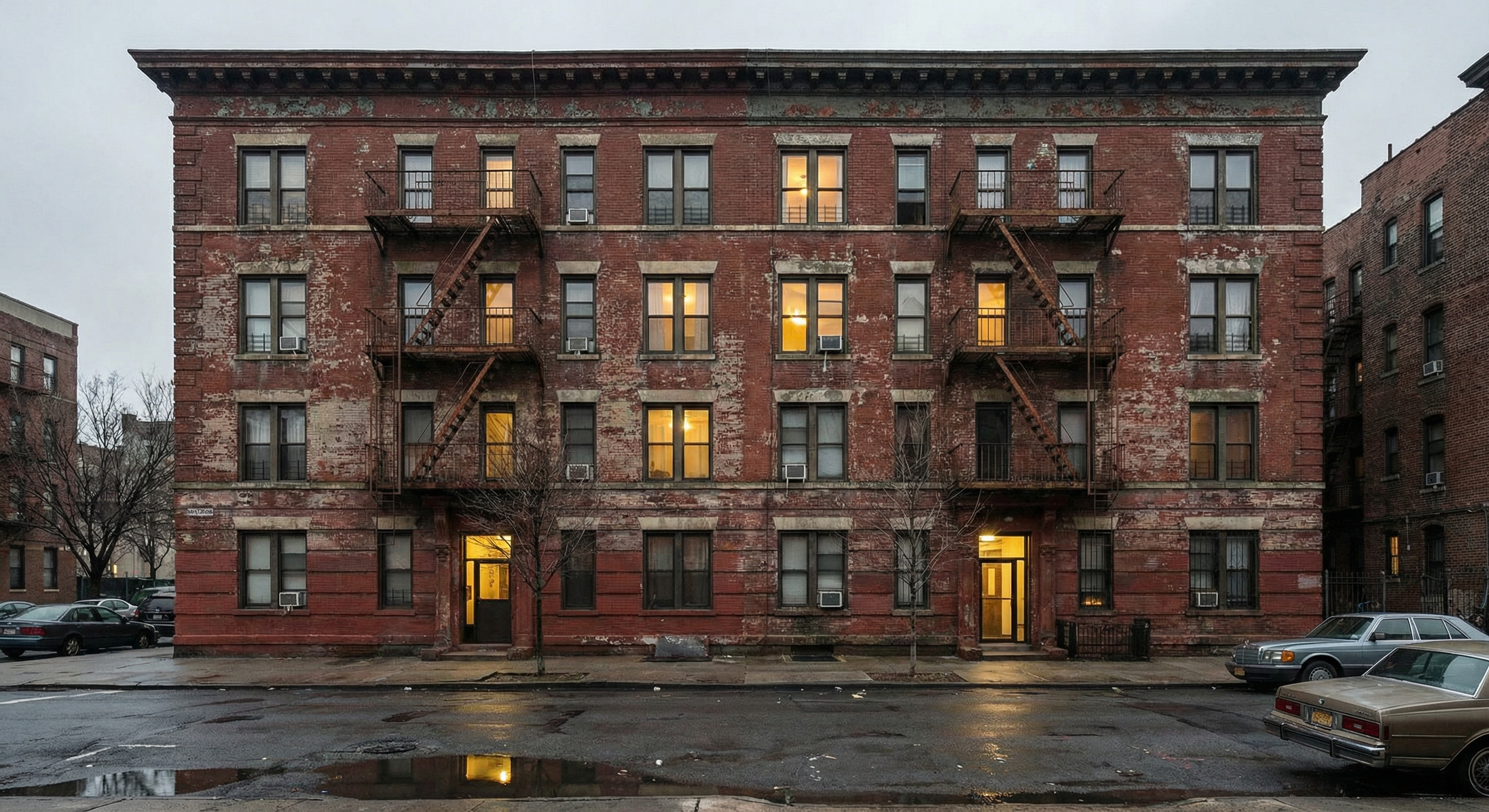
Rent Stabilization's False Promise: Why 'Moderate' Price Controls Reproduce the Same Market Distortions
Oregon, California, and New York have marketed rent stabilization as the sensible middle ground between the free market and "hard" rent control. The data shows there is no meaningful difference.
· 5 min read · By AHI Research

Shelter costs rose 3.0% year-over-year through February 2026 — the single largest contributor to overall inflation, even as headline CPI moderated to 2.4%. Renters across the country are watching their budgets squeezed by a market that simply does not have enough housing to meet demand. Against this backdrop, a new generation of rent regulation laws promises relief without the "hard" version of rent control that economists have spent decades condemning. These laws go by a different name: rent stabilization.
The branding is deliberate. "Stabilization" sounds measured, responsible, and technically sophisticated. It exempts new buildings. It permits "reasonable" annual increases. It avoids the political baggage of frozen rents and black markets. In 2019 alone, Oregon enacted the first statewide rent stabilization law in U.S. history and California followed with AB 1482, the Tenant Protection Act. Dozens of cities have since expanded or strengthened local programs. Proponents argue these laws represent a new, smarter approach.
They don't. The economic mechanism is identical to traditional rent control, and the empirical evidence shows the same consequences: reduced supply, misallocated housing, and renters outside the protected pool paying more for what remains.
What the "Moderate" Labels Actually Mean
Oregon's SB 608 allows annual rent increases of up to 7% plus the prior year's Consumer Price Index change, applied to dwelling units in structures at least 15 years old. California's AB 1482 caps increases at 5% plus local CPI, with a maximum of 10%, also for buildings 15 years or older. New York's Housing Stability and Tenant Protection Act of 2019 strengthened the city's existing rent stabilization framework, making it harder to remove units from regulation and ending vacancy decontrol — the mechanism that previously allowed rents to reset to market rates when tenants moved out.
The 15-year construction exemption is supposed to protect new supply from being deterred. The "reasonable" caps are supposed to allow landlords to cover cost increases while protecting tenants from sudden shocks. The logic is appealing. The data is not.
Price Ceilings Remain Price Ceilings
The critical economic insight is this: the magnitude of a price ceiling matters far less than its existence. Any cap set below the market-clearing price creates a wedge between supply and demand. Friedrich Hayek's central argument in The Constitution of Liberty applies with full force: price controls prevent the price system from transmitting accurate information about scarcity to producers and consumers. A rent that is capped at 7% below market rate is economically identical to a rent capped at 50% below market rate in its structural effect — both prevent the price signal from doing its job.
What changes with "moderate" stabilization is the speed at which distortions accumulate, not whether they accumulate. A 7% cap in a market where rents would otherwise rise 12% still tells landlords their assets are generating below-market returns. Over time, the rational response is identical: defer maintenance, convert to condominiums or owner-occupied units, or exit the rental market entirely.
Thomas Sowell captured the logic in Basic Economics: "The question is not whether price ceilings create shortages. They do. The question is only how long it takes for the shortage to become obvious."
The Stanford Evidence: Even "Moderate" Controls Collapse Supply
The definitive empirical test of this claim came from a landmark 2018 study by Stanford economists Rebecca Diamond, Timothy McQuade, and Franklin Qian. Their paper, published as NBER Working Paper 24181, exploited a natural experiment in San Francisco — exactly the kind of rent stabilization system now being replicated nationwide.
San Francisco's rent control covers older multi-family buildings (built before 1980) but exempts new construction. It permits landlords to pass through capital improvement costs. It is, by the standards of housing policy advocates, a moderate program. Yet the researchers found:
- Landlords covered by rent control reduced the supply of rental housing by 15%, primarily through condo conversions, Ellis Act evictions, and demolition
- The city-wide rent level increased by 5.1% as the reduced supply drove up rents on uncontrolled units
- Protected tenants stayed in their apartments up to 20% longer than market conditions would otherwise warrant, creating persistent misallocation
The study's conclusion was unambiguous: "Rent control appears to help affordability in the short run for current tenants, but in the long run decreases affordability, fuels gentrification, and creates negative externalities on the surrounding neighborhood." A policy nominally aimed at protecting renters made housing more expensive for everyone who didn't already hold a protected lease.
The New-Construction Exemption Does Not Protect Supply
Proponents of rent stabilization point to the construction exemption as the key distinction from "old" rent control. If new buildings are exempt for 15 years, the argument goes, developers will still build, and supply will be protected.
The Diamond study dismantles this argument directly. Landlords in San Francisco didn't respond to rent control by failing to build new buildings — they responded by removing existing buildings from the rental market and replacing them with exempt owner-occupied alternatives. The pipeline of new units never filled the gap left by the units that exited regulation.
There is a second problem: developers respond to the expectation of regulation, not just its current scope. A rational developer building a multi-family rental building in 2026 in California, Oregon, or New York knows that their building will become subject to rent caps in 15 years. That future liability reduces the expected return on new construction today. It does not eliminate it — hence some new building still occurs — but it tilts the economics against new rental supply and toward condominiums, short-term rentals, and luxury units with higher margins that can absorb the eventual cap.
Census Bureau data on new residential construction consistently show that permit activity in high-regulation markets lags the national average, even accounting for land costs and income levels. The regulatory environment shapes developer behavior at the margin, and rent stabilization is part of that environment.
New York City's 55-Year Lesson
New York City offers the longest natural experiment with rent stabilization in the country — and the most instructive. The city has operated a rent stabilization system covering roughly one million units, according to the NYC Rent Guidelines Board, for decades. The 2019 Housing Stability and Tenant Protection Act deepened the system further by eliminating vacancy decontrol, which had allowed units to exit regulation when long-term tenants moved out.
The result: New York City simultaneously has one of the largest rent-stabilized housing stocks in the world and one of the most expensive rental markets on the planet. The two facts are not a coincidence — they are causally connected. Rent stabilization has frozen a large share of the housing stock in the hands of long-term incumbents, removed the incentive for landlords to invest in maintenance, and forced newcomers to compete for an increasingly thin pool of market-rate units at escalating prices.
The apparent paradox — vast rent stabilization and unaffordable rents — resolves when you understand the economic mechanism. Stabilization protects current tenants. It does nothing for the person who needs an apartment today. That person faces a market with constrained supply — because stabilization has deterred new rental construction and encouraged the conversion of existing rentals to owner-occupied units — and must compete at market rates for what little remains.
"In many cases rent control appears to be the most efficient technique presently known to destroy a city — except for bombing." — Assar Lindbeck, Swedish economist
Who Benefits, and Who Pays
Every rent stabilization scheme creates two classes of renters: those inside the system and those outside it. Those inside — long-term tenants in regulated buildings — benefit directly. Their rents are lower than the market would otherwise require. They have strong incentives to stay, regardless of whether their unit matches their current needs. An empty nester in a three-bedroom rent-stabilized apartment in Manhattan has no financial reason to move; a growing family seeking that same apartment simply cannot access it.
Those outside the system — newcomers, young workers, recent migrants, and anyone whose life requires mobility — bear the full cost of the supply reduction the system causes. Census Bureau mobility data consistently show that geographic mobility has declined in the United States over the past several decades. High-regulation housing markets are a significant contributor: when leaving a rent-stabilized unit means surrendering a below-market lease, households stay put even when economic or personal circumstances favor moving. This lock-in reduces the labor market dynamism that allows workers to move toward opportunity — a secondary harm that compounds the direct housing affordability cost.
The Supply-Side Answer
Milton Friedman wrote in Free to Choose that "most economic fallacies derive from the tendency to assume that there is a fixed pie." The housing market is not a fixed pie. Supply can expand in response to demand — if policy allows it.
The evidence from cities that have pursued supply-side reform tells a different story than rent stabilization. Minneapolis eliminated single-family zoning in 2018 and has seen rent growth moderate compared to peer cities. Tokyo — which has among the most permissive zoning in the developed world — remains far more affordable than U.S. coastal cities despite being one of the world's largest metropolitan areas. The common thread is not rent caps; it is the absence of regulatory barriers to construction.
Rent stabilization is demand-side protection dressed up as housing policy. It alleviates short-term pressure for individual tenants while worsening the structural supply shortage that created the pressure in the first place. Its "moderate" framing makes it politically easier to pass than traditional rent control. Its economic effects are not moderate at all. They accumulate slowly, invisibly, and are most keenly felt by the renters who have no seat at the political table — the ones who haven't moved in yet.
The fifty-year research record on rent control is unambiguous. Rent stabilization is rent control by another name. The economic laws that govern one govern the other. Labeling a price ceiling as "moderate" does not change what it is, or what it does.