Recent Analysis

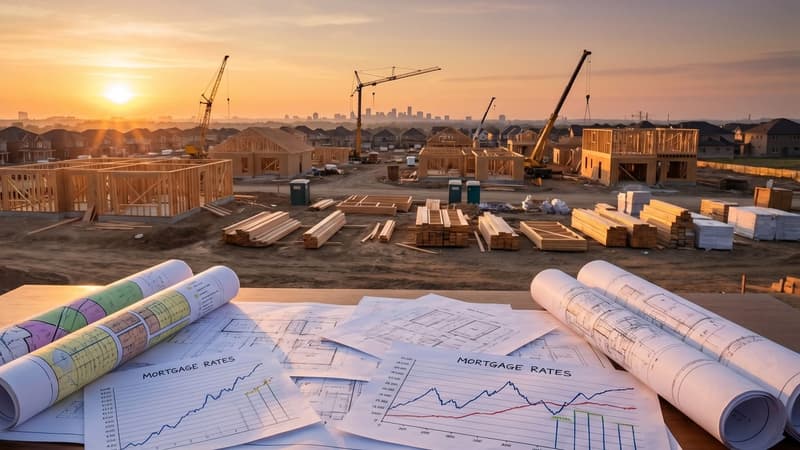
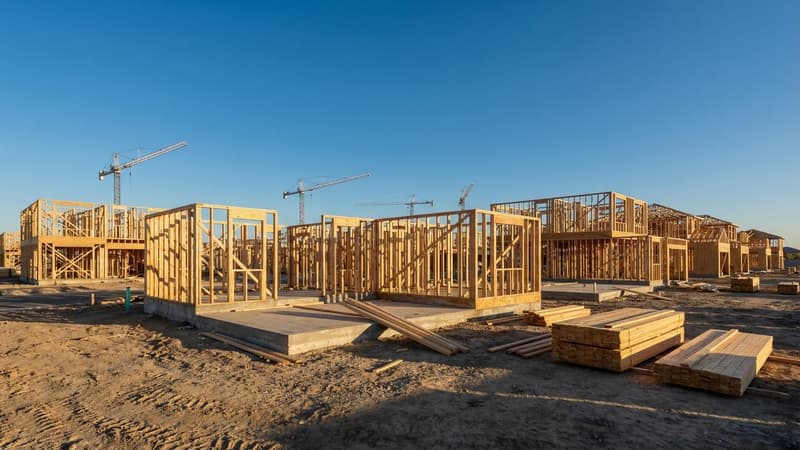
Suburban homes under construction beside mortgage paperwork and zoning maps on a desk
Policy Analysis

The Conforming-Loan Ratchet: Why Higher Federal Loan Limits Cannot Fix Housing Affordability on Their Own

FHFA raised the 2026 conforming limit to $832,750, but pipeline and rate data show why expanding credit ceilings cannot fix affordability without faster supply growth.

·5 min
Suburban homes at dusk with household budget paperwork and a glowing chart on a table inside
Market Data

The Real-Wage Housing Squeeze: Why Lower Mortgage Rates Have Not Restored Affordability in 2026

Affordability is being squeezed by three spreads at once: wages versus inflation, shelter costs versus headline relief, and mortgage-rate levels versus incomes.

·4 min
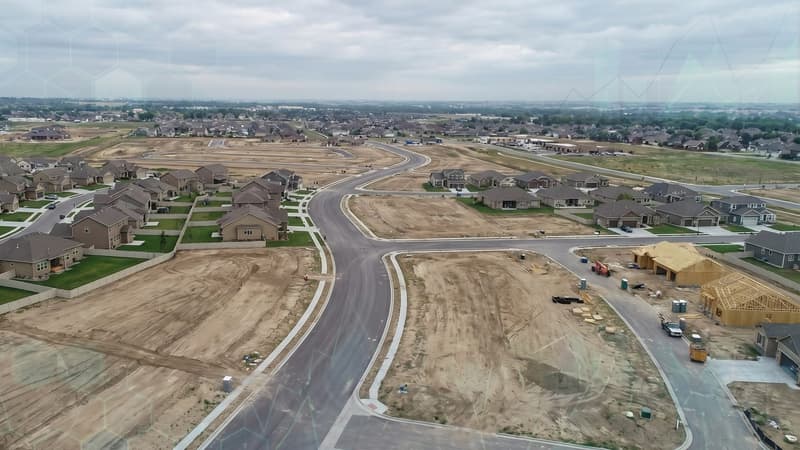
Partially built suburban homes and idle construction equipment at dawn with a distant city skyline
Policy Analysis

The Housing Data Blackout: How Delayed Census Construction Releases Distort Spring 2026 Policy

February and March construction releases were delayed to April 29, leaving spring housing policy to run on stale supply data and partial demand signals.

·4 min
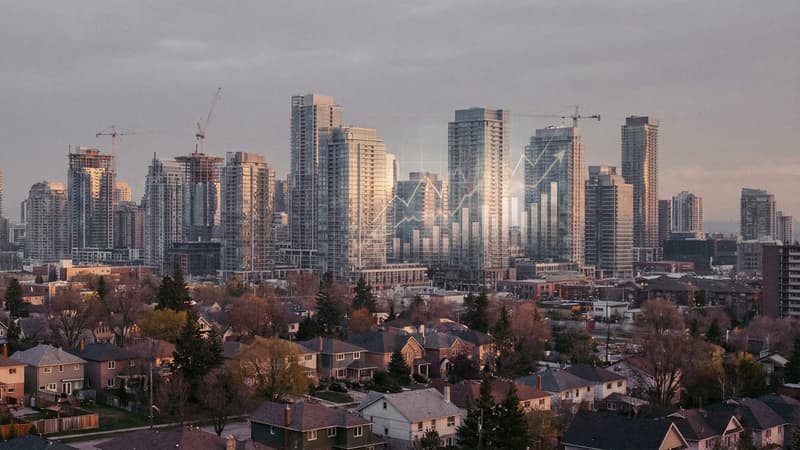
Panoramic view of suburban housing and downtown high-rises with a federal building in the distance under overcast light
Policy Analysis

The Mortgage Ladder Keeps Rising: How FHA and Conforming-Loan Expansion Inflate Demand Faster Than Supply

FHA insured 766,942 forward mortgages in FY2024 while conforming limits rose to $832,750 for 2026. In supply-constrained markets, expanding credit keeps capitalizing into higher prices.

·5 min
Aerial view of the Houston, Texas skyline and vast surrounding residential neighborhoods extending toward the horizon, illustrating the city's expansive housing supply
Zoning and Supply

Houston's Housing Lesson: What America's Largest Unzoned City Reveals About Supply, Prices, and Central Planning

Houston — America's largest city without traditional zoning — builds more homes than almost any other metro and costs 50% less than comparable cities. The data makes the free-market case for supply reform.

·5 min
Aerial view of a stalled residential construction project with exposed steel framing and stacked lumber materials on a cloudy day
Policy Analysis

One Year of Liberation Day: How Trade Protectionism Became Housing's Hidden Tax

One year after Liberation Day, tariffs on construction materials raised the cost floor by $7,000–$13,000 per home, suppressed housing starts, and fell most heavily on households least able to absorb the burden.

·8 min
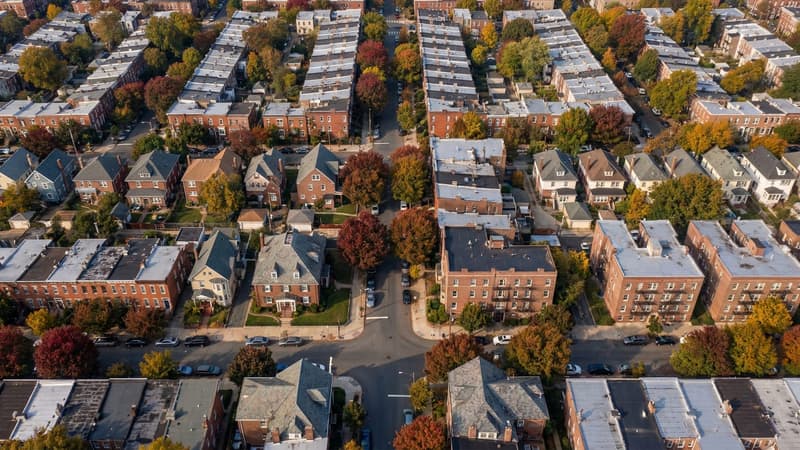
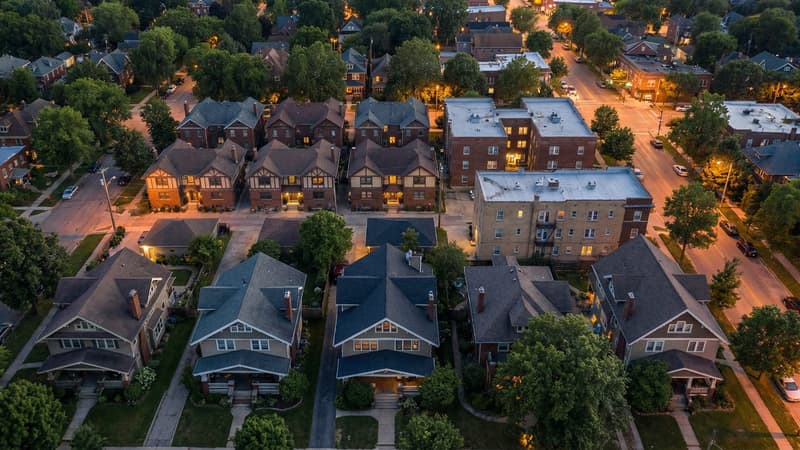
Aerial view of a dense American residential neighborhood with varied housing types — rowhouses, single-family homes, and walkup apartments on tree-lined blocks in autumn colors
Policy Analysis

The Moving Tax: How Real Estate Transfer Levies Freeze Housing Supply and Hit Working Families Hardest

Real estate transfer taxes promise easy revenue for affordable housing — but the data show they suppress supply, trap families in place, and devastate the budgets they claim to fix.

·5 min
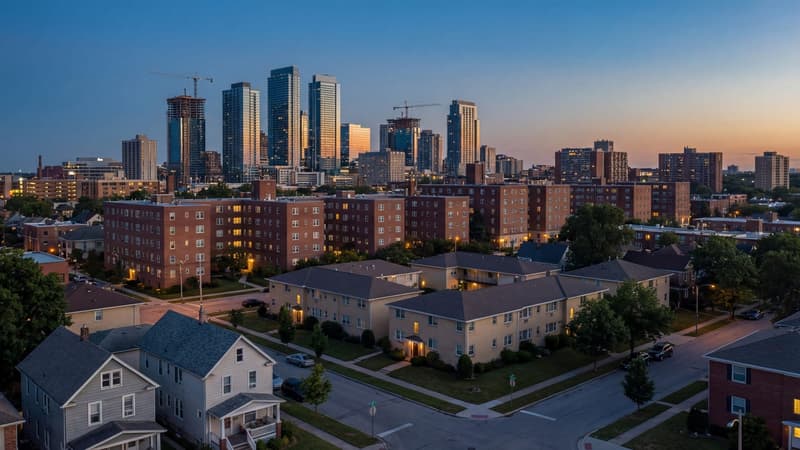
Aerial view of dense Victorian brownstone rowhouses stretching along tree-lined streets, with modern glass residential towers visible on the distant skyline
Zoning and Supply

Frozen in Place: How Historic Preservation Zoning Locks America's Priciest Neighborhoods in Permanent Housing Scarcity

Historic landmark law operates as a permanent supply restriction. With 37,900+ designated buildings in NYC and 20% of Manhattan under LPC review, an aesthetics commission with no housing mandate is a hidden zoning board with no sunset clause.

·5 min
Multi-story concrete parking garage adjacent to urban apartment buildings, showing repeating rows of empty parking spaces across elevated deck levels
Zoning and Supply

The Parking Tax: How Mandatory Minimum Parking Requirements Drive Up the Cost of Every New Home

Structured parking costs $20,000–$80,000 per space. Government mandates it. Renters and buyers pay for it — whether they own a car or not. States and cities that are eliminating minimums are proving what free-market economics predicted.

·5 min
Residential construction site showing exposed metal framing and steel structural components in an unfinished home
Policy Analysis

The Tariff Surcharge Nobody Talks About: How Metal Price Inflation Is Adding Thousands to Every New Home

BLS data shows metal molding and trim up 61.7% YoY, metal windows up 20.2%. Imported materials are getting cheaper — tariffs are maintaining domestic prices above them. In the post-SCOTUS tariff era, this cost is embedded in every new home.

·8 min
Aerial view of a suburban housing grid under late-afternoon light representing constrained spring housing market
Market Data

Friday Market Recap — March 28, 2026: Rates Surge to 6.38%, the Spring Market Window Slams Shut

30-yr fixed hit 6.38% — up 40 bps from the Feb low. Q4 GDP decelerated to 0.7%. The Fed is boxed in between slowing growth and sticky 2.7% core PCE. Spring market faces a reality check.

·10 min
Neoclassical government banking institution building with stone columns under a dramatic overcast sky
Policy Analysis

The Federal Home Loan Bank System: America's Hidden $1 Trillion Housing Finance Subsidy

The FHLBank System provides over $1 trillion in government-backed advances to member banks — inflating mortgage demand and housing prices for 90 years.

·5 min
Layered American cityscape showing new luxury apartments and older filtered housing stock at dusk
Zoning & Supply

How New Luxury Apartments Create Affordable Housing: The Market Mechanism Regulators Keep Blocking

The filtering theory is one of the best-documented findings in housing economics. New market-rate construction sets off a vacancy chain that eventually makes older units cheaper. Government regulation keeps breaking that chain.

·7 min
Aerial view of an American city grid showing contrasting vacant parcels and developed blocks near the financial district at golden hour
Policy Analysis

Taxing Land, Not Buildings: Milton Friedman's Radical Fix for America's Housing Crisis

Standard property taxes penalize construction and reward idle land-banking. Friedman called land value taxation "the least bad tax." With prices 54% above 2020 levels, the case has never been more urgent.

·6 min
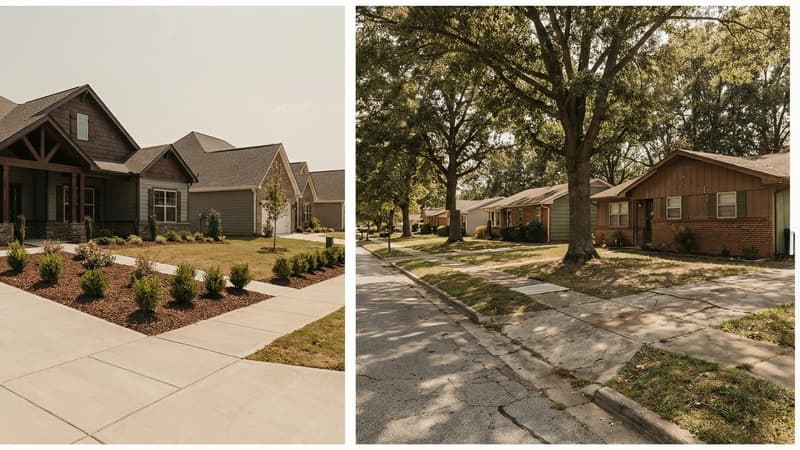
Newly constructed modern suburban home alongside an older 1970s-era residential street, representing the contrast between new and existing housing stock
Market Data

The Price Inversion: Why New Homes Are Now Cheaper Than Used Ones

In Q4 2025, new homes cost $9,600 less than existing ones — reversing a $66,000 historical premium. What the inversion reveals about rate lock-in, aging supply, and distorted price signals.

·8 min
Abstract visualization of state tax maps overlaid on urban housing density patterns in a policy journal style
Policy Analysis

The SALT Subsidy: How Federal Tax Policy Entrenches the States That Have Made Housing Unaffordable

The SALT deduction overwhelmingly benefits California, New York, and New Jersey — the same states with the worst housing affordability. Restoring it would amount to a federal subsidy for the fiscal architecture that created the crisis.

·5 min
Aerial view of a partially framed residential construction site with stacked lumber and steel materials on pallets under overcast skies
Policy Analysis

The Tariff Tax on New Homes: How Import Duties Are Pricing Out American Buyers

Builder confidence at 38. Thirty-seven percent of builders cutting prices. The March 2026 data shows a housing market stalled by a policy-made cost structure — with tariffs as a leading driver.

·8 min
A dense residential neighborhood seen from above with a single undeveloped lot surrounded by houses
Zoning and Supply

The Political Economy of NIMBY: How Local Veto Power Manufactures Housing Scarcity

Local opposition to new housing isn't just a neighborhood dispute — it is a policy mechanism that systematically restricts supply and transfers wealth from renters to incumbent homeowners.

·4 min
Stacks of rough-sawn lumber and steel building materials at a large industrial supply yard under overcast light
Policy Analysis

Construction Under Tariff: How Import Duties on Building Materials Are Pricing Buyers Out of New Homes

Metal molding prices up 61.7% YoY. Canadian lumber facing a 45% combined duty rate. Building material inputs up 3.4%. Tariffs are a hidden tax that first-time buyers pay at closing.

·5 min
Rows of identical urban apartment buildings under cool blue twilight light, representing rent-stabilized housing stock
Rent Control

Rent Stabilization's False Promise: Why 'Moderate' Price Controls Reproduce the Same Market Distortions

Oregon, California, and New York sell rent stabilization as the responsible middle ground. Stanford's data shows landlords still cut supply 15% and city-wide rents still rise — under any version of a price ceiling.

·5 min
A residential street in late winter with a For Sale sign in front of a single-family home, bare trees and overcast sky
Monetary Policy

$700 Billion in Housing Wealth Just Evaporated — and Buyers Still Can't Afford a Home
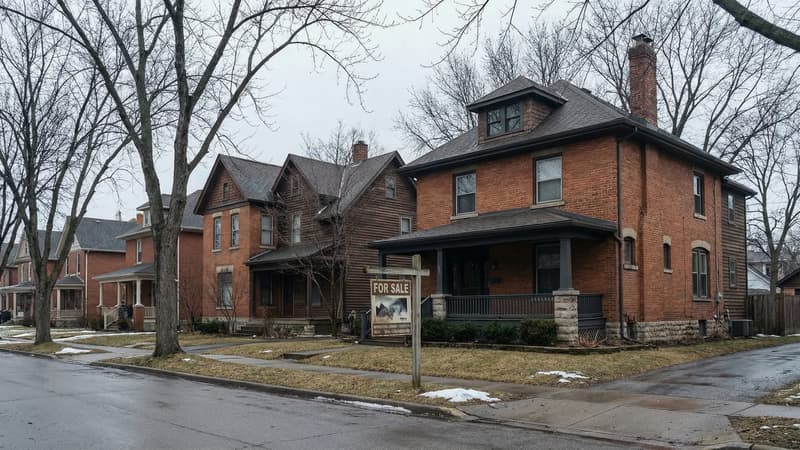
The Fed's Z.1 data shows household real estate assets fell two consecutive quarters to $47.9T. Mortgage debt hit a record $13.8T. Falling prices provide no relief when buyers still face 6% rates.

·8 min
Aerial view of a suburban housing development with neat rows of homes and empty lots, representing constrained housing supply
Market Data

Friday Market Recap — March 21, 2026: Fed Holds, Rates Climb to 6.22%, and the Spring Market Stalls

FOMC held at 3.5–3.75% with a first dovish dissent. 30-yr rate jumped to 6.22% — the highest of 2026. Pending sales +1.8% but -0.8% YoY. Builder confidence stuck at 38 for the 21st straight month below 50.

·8 min
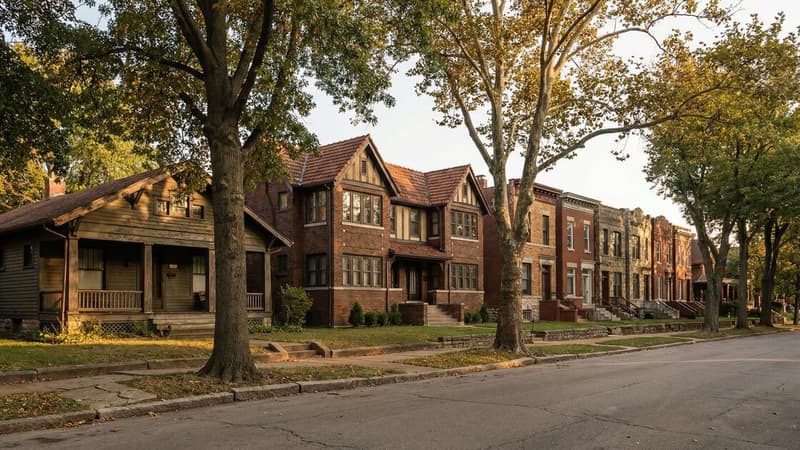
Tree-lined American pre-war residential street showing a mix of bungalows, duplexes, and small brick apartment buildings in warm afternoon light
Zoning and Supply

The Missing Middle: How America Banned Its Most Efficient Affordable Housing

Before single-family zoning locked in the status quo, duplexes and small apartment buildings naturally filled American neighborhoods. Today they're illegal on 75% of residential land.

·7 min
Suburban housing development under construction with wooden frames and cranes in warm afternoon light
Policy Analysis

The ROAD to Housing: Supply-Side Policy Finally Takes Center Stage

The Senate passed the ROAD to Housing Act 89-10 and the White House signed a sweeping deregulatory EO the same week. The supply-side framework is right. Here's what it actually does — and where its limits lie.

·7 min
Suburban homes on a quiet street under a dramatic overcast sky with a for-sale sign in the foreground, illustrating insurance and mortgage barriers in the housing market
Policy Analysis

The Invisible Housing Tax: How Government Rate Suppression Created America's Home Insurance Crisis

Home insurance costs are up 46% since 2021, with 13.6% of U.S. homes now uninsured. California's Proposition 103 shows exactly how price regulation destroys markets — and who pays the deferred bill.

·8 min
Urban apartment construction site with mixed-use development under a clear sky, representing housing production economics
Zoning & Supply

The Inclusionary Zoning Trap: How "Affordable Housing" Mandates Destroy the Supply They Promise to Create

Over 800 cities mandate affordable units in new developments. Research shows these policies suppress far more market-rate housing than they create — making the crisis worse.

·5 min
Aerial view of the U.S. Capitol building with a suburban residential neighborhood stretching toward the horizon under dramatic morning sky
Policy Analysis

The ROAD to Housing Act: What Congress Got Right — and What It Got Wrong

The Senate passed the 21st Century ROAD to Housing Act 89-10. NEPA reform and manufactured housing deregulation are real wins. The investor ban targets a group that owns under 1% of homes.

·8 min
Aerial view of a still American suburban neighborhood at dusk, rows of houses with glowing windows under deep blue and amber light
Monetary Policy

The Fed's Rate Trap: How Zero-Interest Policy Locked Millions Out of the Housing Market

FHFA data show 1.72 million "missing" home sales between 2022 and 2024 — a direct consequence of the Fed's pandemic-era rate suppression and the lock-in crisis it created.

·5 min
Aerial view of a dense residential neighborhood with single-family homes stretching to a distant financial district skyline
Policy Analysis

The Wall Street Landlord Myth: How Misidentifying the Villain Prolongs the Housing Crisis

Institutional investors own less than 1% of single-family homes, yet Congress is targeting them for housing costs. The real issue: a structural 4-million-unit supply deficit built over decades of zoning and regulatory failures.

·5 min
Towering stacks of bureaucratic permit files and legal documents surrounding a stalled apartment construction frame in an urban California neighborhood
Policy Analysis

CEQA at 54: How California's Environmental Law Became the Nation's Most Powerful Anti-Housing Weapon

64% of CEQA lawsuits come from NIMBYs and competitors — not environmentalists. California home prices went from 30% above national in 1970 to 80% above by 1980. The data on five decades of supply suppression.

·5 min
Modern multi-story apartment building facade at dusk with illuminated windows
Market Data

The Housing Inflation Trap: How Shelter CPI's Grip on the Numbers Is Keeping the Fed's Hands Tied

Shelter CPI rose 3.0% in February 2026 — the single biggest driver of inflation. The OER lag keeps the Fed from cutting rates. Only supply breaks the cycle.

·7 min
Residential housing construction site with wood-framed homes under a late-afternoon sky
Market Data

Friday Market Recap — March 13, 2026: Rates Rebound, Tariffs Hit, and the Spring Market Faces a Dual Squeeze

30-year rate rebounded to 6.11% after a brief sub-6% window. Tariffs added $10,900+ per new home. Permits fell 5.8% YoY. Full weekly data dashboard with free-market analysis.

·10 min
Empty city apartment building facade with rows of windows and a quiet residential street below at dusk
Policy Analysis

The Airbnb Scapegoat: Why Short-Term Rental Bans Cannot Fix America's Housing Affordability Crisis

NYC banned short-term rentals — Airbnb listings fell 90% — yet rents still rose 2.1%. Against a 3.7-million-unit housing shortage, STR bans address a rounding error while ignoring the supply restrictions that created the crisis.

·5 min
Dense urban residential neighborhood with a mix of housing types surrounded by undeveloped lots constrained by zoning restrictions
Zoning & Supply

The Zoning Tax: How Land-Use Regulations Silently Add $94,000 to Every New Home

America's hidden housing cost driver: a regulatory "zoning tax" that accounts for nearly 24% of every new home's price — or roughly $94,000 — per NAHB-NMHC research.

·5 min
Row of traditional brick single-family homes with For Sale signs on a quiet American residential street
Policy Analysis

The Demand Trap: How Down Payment Subsidies Inflate the Housing Prices They Promise to Fight

The U.S. now operates 2,509 down payment assistance programs. Research shows they raise home prices 4.1% — costing buyers $177B while delivering only $100B in benefits.

·5 min
Modern residential neighborhood with solar panels and energy-efficient windows under a clear sky, representing building energy standards
Policy Analysis

The Green Code Tax: How Federal Energy Mandates Are Pricing First-Time Buyers Out of New Homes

Federal energy mandates under the 2021 IECC add up to $31,000 to every new home's price — with payback periods as long as 90 years for the buyers least able to afford it.

·5 min
Aerial view of a dense urban district with compact housing blocks meeting open farmland at a sharp boundary line
Zoning and Supply

The Urban Growth Boundary Trap: How Planning Lines Price Americans Out of Homeownership

Oregon's UGB turned developable land into a rationed commodity. Fifty years later, Portland home values sit at $546,302 — a textbook illustration of Hayek's knowledge problem applied to housing.

·5 min
Modern manufactured homes with neat lawns and covered porches on a quiet residential suburban street in golden afternoon light
Zoning and Supply

The Market Solution They Won't Allow: How Regulations Suppress Manufactured Housing

Manufactured homes cost $87/sq ft versus $166 for site-built — half the price, federally certified, and banned from most residential land. The data on zoning exclusions and GSE financing gaps tells a damning story.

·5 min
Modern multi-story condominium building exterior with glass and concrete facade on a tree-lined urban street in morning light
Policy Analysis

The Lawsuit Tax on Starter Homes: How Construction Defect Liability Laws Gutted the Condo Market

Construction defect liability laws triggered a 90% collapse in California condo production and eliminated 84% of Colorado's condo developers. The data shows exactly who pays the price.

·5 min
Large-scale apartment construction site with concrete foundations and steel framing, cranes and scaffolding against a blue sky
Policy Analysis

Built to Cost More: How the Davis-Bacon Wage Mandate Prices Affordable Housing Out of Reach

A 1931 wage law forces federally funded construction to pay 22% above market rates — inflating every affordable housing unit government tries to build.

·5 min
Stacks of dimensional lumber at a lumberyard with freight containers and industrial port infrastructure in the background
Policy Analysis

The Tariff Tax on Housing: How Trade Protectionism Inflates the Cost of Every New Home

Building material costs are up 41.6% since the pandemic. Lumber tariffs exceed 45%. Tariffs add $10,900 to every new home — a hidden tax on America's housing crisis.

·5 min
A detached backyard cottage with warm lighting adjacent to a main house in a residential neighborhood at dusk
Zoning & Supply

The Backyard Revolution: How ADU Deregulation Unlocked a Hidden Housing Supply

America's housing shortage sits at 3.7 million units. When California stripped ADU restrictions, permits surged 15,000% — proof that markets create supply when government steps aside.

·5 min read
Affordable housing development complex under construction with stacked architectural cost estimate documents on a planning desk in a government office
Policy Analysis

The LIHTC Illusion: How America's $13.5 Billion "Affordable Housing" Subsidy Builds Homes No Poor Family Can Afford

The federal LIHTC program costs $13.5 billion a year, yet produces units averaging $480,000 each in California. Where does the money actually go?

·5 min read
Aerial view of residential subdivision construction adjacent to municipal government building with permit documents
Policy Analysis

The Impact Fee Trap: How Local Government Levies Are Pricing First-Time Buyers Out of New Homes

The average impact fee hit $16,394 per new home in 2024 — adding nearly $20,000 to the purchase price. Over three million households priced out by a single government levy.

·4 min
Urban apartment towers under construction at dusk, illustrating housing production constraints from zoning mandates
Zoning & Supply

The Inclusionary Zoning Paradox: How "Affordable Housing" Mandates Make Housing Less Affordable

800+ cities impose inclusionary zoning mandates. The average program produces 27 affordable units per year — while reducing total housing supply and raising market-rate prices.

·8 min
The 30-Year Fixed Mortgage: How Government Engineered America's Housing Finance System
Policy Analysis

The 30-Year Fixed Mortgage: How Government Engineered America's Housing Finance System — and Why It Failed

The 30-year FRM is a New Deal government creation. Today it backs $13T in debt and inflates the prices it was meant to lower. A rigorous free-market analysis.

·8 min
The Inflation Tax: How Money Creation Silently Destroyed Housing Affordability
Monetary Policy

The Inflation Tax: How Money Creation Silently Destroyed Housing Affordability

Since 2020, cumulative inflation has eroded 26% of the dollar's purchasing power while home prices rose nearly twice as fast. Friedman's "hidden tax" dissected.

·8 min
The Property Tax Lock-In: How Assessment Caps Freeze Housing Supply
Policy Analysis

The Property Tax Lock-In: How Assessment Caps Freeze Housing Supply

Prop 13-style assessment caps trap long-term owners in place, freezing supply and pricing out first-time buyers. A free-market analysis of housing's hidden inventory problem.

·7 min
The NIMBY Veto: How Local Opposition Prices Americans Out of Housing
Zoning & Supply

The NIMBY Veto: How Local Opposition Prices Americans Out of Housing

74.5% of multifamily developers face NIMBY opposition that adds 5.6% to costs and 7.4 months of delay. The math reveals housing's most overlooked barrier.

·7 min
The Hidden Tax: How Government Regulation Adds $93,870 to Every New Home
Policy Analysis

The Hidden Tax: How Government Regulation Adds $93,870 to Every New Home

Permit fees, energy codes, impact charges, and bureaucratic delay add nearly $94,000 to the price of every new home built.

·8 min
Quantitative Easing and Home Prices: The $8 Trillion Experiment
Monetary Policy

Quantitative Easing and Home Prices: The $8 Trillion Experiment

The Fed bought trillions in mortgage-backed securities. Instead of stabilizing markets, it created the largest housing bubble in history.

·7 min
Single-Family Zoning: The Invisible Wall Blocking Affordable Housing
Zoning & Supply

Single-Family Zoning: The Invisible Wall Blocking Affordable Housing

75% of residential land in most US cities is restricted to single-family homes. Research shows this inflates prices by 20-50%.

·8 min
Why America Can't Build Enough Homes: The Regulatory Bottleneck
Zoning & Supply

Why America Can't Build Enough Homes: The Regulatory Bottleneck

Permitting delays, environmental reviews, and compliance costs add $93,000+ to every new home built in America.

·7 min
Housing Market 2026: Key Metrics Every Buyer Should Watch
Market Data

Housing Market 2026: Key Metrics Every Buyer Should Watch

Essential metrics for 2026: mortgage rates at 6.5%, inventory at 3.5 months, and the worst affordability index in 40 years.

·6 min
How Rent Control Reshaped San Francisco's Housing Market
Rent Control

How Rent Control Reshaped San Francisco's Housing Market

Stanford research shows SF rent control reduced rental supply by 15% and actually increased market rents by 5.1%.

·7 min
Fannie Mae & Freddie Mac: How Mortgage Guarantees Inflate Home Prices
Policy Analysis

Fannie Mae & Freddie Mac: How Mortgage Guarantees Inflate Home Prices

Government-backed mortgage guarantees subsidize demand without increasing supply — inflating home prices while taxpayers bear the risk.

·7 min

Topics We Cover

Frequently Asked Questions

What causes the affordable housing crisis?

The affordable housing crisis is primarily driven by restrictive zoning laws that limit housing supply, Federal Reserve monetary policy that inflates asset prices, government-imposed regulatory compliance costs that increase construction expenses, and rent control policies that discourage new development and reduce available rental inventory.

How does monetary policy affect housing prices?

The Federal Reserve's low interest rate policies and quantitative easing programs increase the money supply, driving capital into real estate assets. This inflates home prices beyond what wage growth supports, making housing unaffordable for middle and lower-income families. When rates rise rapidly, affordability worsens further as mortgage payments spike while elevated prices persist.

Does rent control make housing more affordable?

Economic research consistently shows that rent control reduces the overall supply of rental housing, leads to deterioration of housing quality, creates black markets, and benefits incumbent tenants at the expense of newcomers. Studies from Stanford, MIT, and other institutions demonstrate that rent control ultimately makes housing less affordable and less available in the long run.

How do zoning laws impact housing affordability?

Restrictive zoning regulations — including single-family zoning, minimum lot sizes, height restrictions, and parking requirements — artificially constrain housing supply in high-demand areas. Research shows that these regulations can increase home prices by 20-50% in heavily regulated markets. Zoning reform that allows greater density and mixed-use development is one of the most effective ways to increase housing supply and reduce costs.

What is the free-market approach to solving the housing crisis?

The free-market approach focuses on removing government barriers to housing supply: eliminating restrictive zoning, reducing regulatory compliance costs, ending government-backed mortgage subsidies that inflate prices, pursuing sound monetary policy, and allowing the market to naturally respond to demand. This approach draws from economists like Milton Friedman, Thomas Sowell, and Friedrich Hayek.

How do government housing subsidies affect the market?

Government housing subsidies — including FHA loans, GSE guarantees through Fannie Mae and Freddie Mac, and the mortgage interest deduction — increase demand without addressing supply constraints. This drives up housing prices, disproportionately benefits higher-income homeowners, and shifts risk to taxpayers. Research suggests these programs contribute to housing price inflation rather than genuine affordability.

About This Publication

The Affordable Housing Initiative publishes rigorous economic analysis grounded in Austrian and Chicago school thought — Milton Friedman, Thomas Sowell, Friedrich Hayek. We examine how monetary policy, zoning restrictions, rent control, government-backed mortgages, and regulatory compliance costs drive housing unaffordability. Every claim is backed by data or sourced economic research.

We publish two articles per weekday covering housing policy, real estate economics, and market analysis, plus a data-dense Friday Market Recap covering mortgage rate movements, housing inventory, price trends, and policy developments.