The Inflation Tax: How Money Creation Silently Destroyed Housing Affordability
Milton Friedman called inflation "taxation without legislation." Since 2020, the U.S. dollar has lost 26% of its purchasing power, and home prices have risen nearly twice as fast. The result is a housing market locked to most Americans.
· 8 min read · By Affordable Housing Initiative
There is a moment in a famous 1978 Free to Choose lecture where Milton Friedman pauses, looks directly into the camera, and says: "Inflation is the only form of taxation that can be levied without any legislation." He meant it as a warning. For the generation of Americans now priced out of homeownership, those words read less like a warning and more like a diagnosis already confirmed.
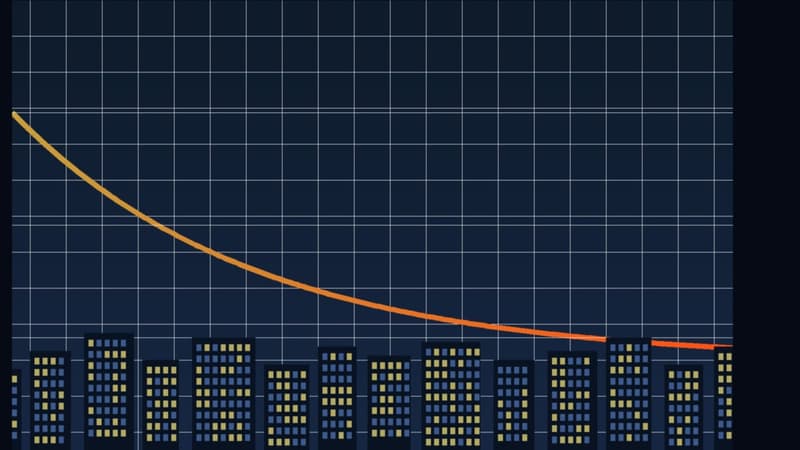
Since January 2020, the cumulative inflation rate in the United States has reached approximately 25.7%, according to CPI data tracked by the U.S. Bureau of Labor Statistics. A dollar that could purchase $1.00 worth of goods in 2020 now purchases roughly $0.80 in equivalent value. That is not abstract monetary theory. It is the silent arithmetic working against every household that has spent the last five years trying to save a down payment while home prices appreciated faster than any salary could follow.
The Numbers That Tell the Story
According to data compiled by Clever Real Estate drawing on Federal Reserve and BLS sources, the median U.S. home price today stands at approximately $431,000 — roughly 24 times the median home price in 1963, while overall inflation since that year is only 10 times. If home prices had merely tracked general inflation since 1963, the median home would cost $177,500. It does not. The gap between those two numbers — roughly $253,000 — is the compounded premium of supply restrictions, monetary distortion, and government-inflated demand stacked on top of each other over six decades.
The post-pandemic window is even starker. The National Association of Home Builders reported in March 2025 that 74.9% of all U.S. households — approximately 100.6 million out of 141.1 million — cannot afford the median-priced new single-family home, which stood at $459,826. To qualify under conventional underwriting standards (mortgage, taxes, and insurance not exceeding 28% of income), a household must earn at least $141,366 annually. The median U.S. household income is approximately $83,150. The affordability gap is not marginal; it is structural.
Friedman's Hidden Tax in Practice
The classical Friedman framework treats inflation as a form of government finance — a means by which the state extracts real purchasing power from holders of currency without passing a tax bill. "Inflation is made in Washington because only Washington can create money," Friedman noted. The mechanism is simple: as the money supply expands, each dollar in circulation commands a smaller share of total economic output. The purchasing power doesn't vanish. It transfers, largely to early recipients of newly created money and to holders of real assets like land and housing.
This transfer is not neutral. It consistently benefits owners and harms renters, savers, and prospective first-time buyers. A homeowner who purchased in 2019 has seen their asset appreciate dramatically in nominal terms even as the real purchasing power of those gains has been partially eroded by inflation. The aspiring buyer who has been saving in a checking account since 2020 has watched their dollar-denominated nest egg shrink in real terms while the price of the asset they're saving toward has risen in both nominal and real terms.
The M2 Acceleration and Its Housing Consequences
Between February 2020 and March 2022, the U.S. M2 money supply expanded by approximately 41%, according to Federal Reserve data — one of the largest short-duration monetary expansions in the nation's peacetime history. This surge was the product of both direct fiscal transfer programs and the Federal Reserve's asset purchase programs, including the purchase of mortgage-backed securities. The Independent Institute documented this mechanism in detail, noting that the money supply and housing market move in close tandem: an influx of newly created dollars bidding against a fixed or slowly expanding housing stock will, with mathematical inevitability, drive up nominal prices.
Hayek's insight on price signals is directly applicable here. In a market free from monetary distortion, housing prices function as information — they tell builders where to build, investors where to allocate capital, and households where their resources can be most efficiently deployed. When prices are inflated by money creation rather than genuine demand, those signals are corrupted. Builders, responding to what appear to be high-margin opportunities, may begin construction that later proves uneconomic when the monetary stimulus recedes. Buyers, seeing prices rise and fearing further appreciation, may overextend. The boom contains the seeds of the bust — which is precisely what the Austrian business cycle theory predicts, and what the 2008 housing collapse confirmed.
Shelter Inflation: The Feedback Loop
The relationship between monetary inflation and housing costs is not one-directional. Housing costs, once elevated, feed back into measured inflation — creating a self-reinforcing cycle that is proving stubbornly resistant to correction. According to analysis published by the Eye on Housing (NAHB's research blog), housing accounted for 63.5% of the total CPI increase in 2024. The shelter component of CPI alone — which captures rent and owners' equivalent rent — represented approximately 36.7% of consumer spending weights and contributed roughly 58% of total inflation that year. In other words, housing is not merely a casualty of inflation. It is now its primary engine.
The BLS's January 2026 CPI release confirmed this persistence: shelter remained the largest single factor in the monthly CPI increase, even as overall inflation moderated to 2.4% year-over-year. The Minneapolis Federal Reserve Bank projected shelter inflation remaining above pre-pandemic levels well into 2025, driven not by demand per se but by the fundamental undersupply of housing that decades of zoning restrictions, regulatory costs, and NIMBYism have created.
The Inequality Dimension: Who Bears the Inflation Tax?
Thomas Sowell's "Basic Economics" reminds us to ask the question that most policy discussions avoid: compared to what? When evaluating inflation's impact on housing, the relevant comparison is not nominal wages versus nominal home prices. It is the relative position of asset-owning households versus non-owning households.
The homeowner's experience of inflation is largely a hedge: their asset, the house, appreciates nominally while the mortgage debt they carry is repaid in depreciated dollars. The renter's experience is the inverse: their rent rises with inflation while their savings, denominated in currency, are eroded by it. The Clever Real Estate analysis makes the disparity concrete: in the 1980s, purchasing the typical home required approximately 3.5 years' worth of median household income. By 2025, that figure had risen to 6.3 years. For median incomes to restore 1985-level affordability, households would need to earn $134,000 annually — nearly double the actual median.
This is not a commentary on individual choices or work ethic. It is the documented arithmetic of a monetary system that consistently redistributes from currency-holders to asset-holders — a redistribution that is most concentrated and most damaging in the housing market, where the asset in question is also the basic human necessity of shelter.
The Policy Implication: Sound Money Is a Housing Policy
The conventional housing affordability debate circles endlessly around supply-side interventions — zoning reform, inclusionary requirements, tax incentives for developers. These are not unimportant. But they address only one side of the ledger. A household that cannot save a down payment because their dollars are depreciating in real terms, against a purchase target that is appreciating in both nominal and real terms, faces a headwind that no amount of upzoning can fully address.
Friedman's prescription was consistent throughout his career: a rules-based, predictable monetary policy that expands the money supply at a modest, stable rate commensurate with real economic growth — not the discretionary expansion that characterized 2020–2022. The Austrian tradition would go further, arguing that the very existence of a central bank empowered to expand the money supply creates the conditions for precisely this kind of boom-bust distortion. Whether one accepts the stronger claim or merely the Friedmanite version, the basic insight is the same: you cannot solve a housing affordability crisis that was partly created by money creation with policies that leave the money creation mechanism untouched.
The families being priced out of homeownership are not victims of insufficient government intervention. In a meaningful sense, they are victims of too much of it — specifically, the monetary intervention that expanded M2 by 41% in two years, flooded the housing market with demand that no realistic supply response could absorb, and then left the resulting price level permanently elevated in the accounts of the families who were saving, not spending, when the music played.
Friedman was right. Inflation is taxation without legislation. In housing, it has been the largest single tax imposed on aspiring homeowners in a generation, and it was levied in silence, without a single vote.
Part of the Monetary Policy & Housing research cluster.