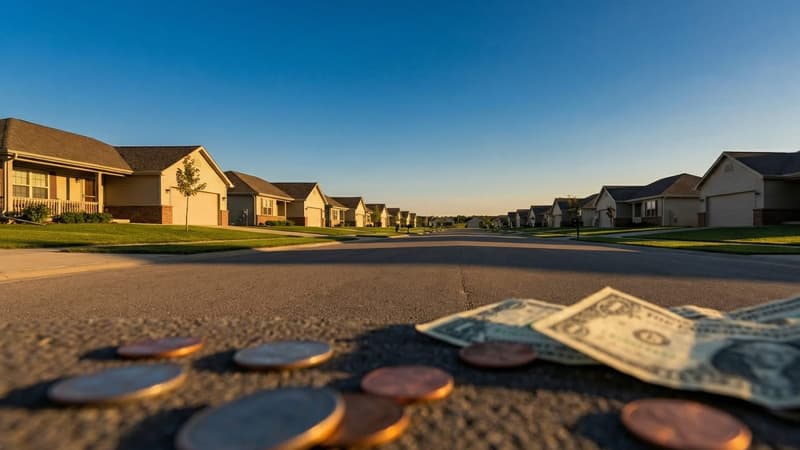
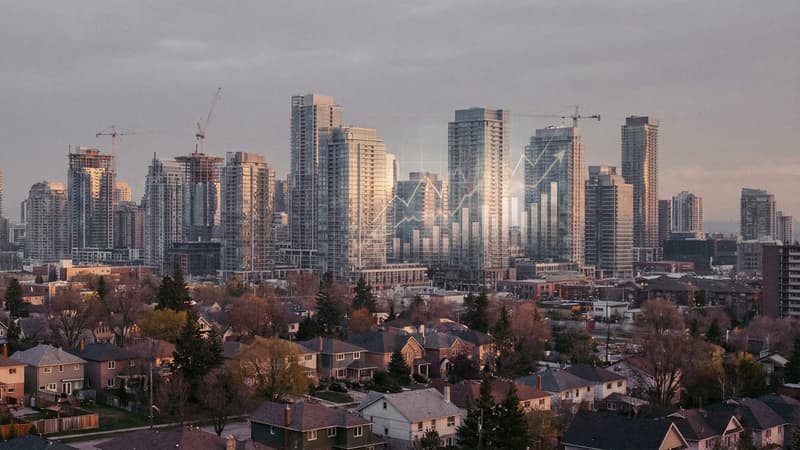
How the Federal Reserve Created the Housing Affordability Crisis
Decades of loose monetary policy did more than inflate asset prices. It priced an entire generation out of homeownership.
· 8 min read · By AHI Research

When Americans ask why they can't afford a home, the conversation usually turns to greedy landlords, foreign investors, or insufficient government programs. Rarely does it turn to the institution most responsible for the price distortion: the Federal Reserve.
The data tells an uncomfortable story. Since 2000, median home prices in the United States have risen over 170%, while median household income has grown roughly 65%. That gap, the affordability gap, didn't emerge from natural market forces. It was engineered by monetary policy.
The Mechanism: How Cheap Money Inflates Housing
The Federal Reserve controls the federal funds rate, which directly influences mortgage rates. When the Fed holds rates artificially low, it creates a chain reaction in housing markets:
- Lower mortgage rates increase borrowing capacity. A buyer who qualifies for a $300,000 mortgage at 7% qualifies for roughly $420,000 at 3.5%. The same monthly payment buys a much more expensive house.
- Increased borrowing capacity drives up bids. When every buyer can afford to pay more, sellers raise asking prices. The extra borrowing power doesn't make housing more affordable. It makes it more expensive.
- Institutional capital floods in. Low yields on bonds and savings accounts push institutional investors into real estate, competing directly with first-time homebuyers for limited inventory.
- Asset price inflation becomes self-reinforcing. Rising home prices encourage speculative buying, further driving prices up in a feedback loop that persists until rates rise or the bubble bursts.
Milton Friedman warned about exactly this dynamic. "Inflation is always and everywhere a monetary phenomenon," he wrote. Housing price inflation is no exception.
The Post-2008 Experiment: QE and the Everything Bubble
After the 2008 financial crisis, the Federal Reserve launched an unprecedented experiment in monetary intervention. The federal funds rate was held near zero for seven years (2008-2015), and the Fed purchased over $4.5 trillion in mortgage-backed securities and Treasury bonds through quantitative easing (QE).
Federal Reserve Balance Sheet: $870 billion (2007) → $4.5 trillion (2015) → $8.9 trillion (2022)
Median Home Price: $218,000 (2009) → $375,000 (2021) → $412,000 (2025)
Median Household Income: $52,000 (2009) → $71,000 (2021) → $78,000 (2025)
The Fed's direct purchases of mortgage-backed securities (MBS) were particularly damaging. By buying MBS, the Fed artificially suppressed mortgage rates below what the free market would have set, creating a massive subsidy for real estate borrowing that was invisible to most Americans.
The Cantillon Effect: Who Benefits First?
The 18th-century economist Richard Cantillon observed that newly created money doesn't enter the economy evenly. It benefits those closest to the money creation first. This "Cantillon Effect" is devastatingly relevant to housing.
When the Fed creates money through QE:
- Wall Street and institutional investors access cheap capital first, buying real estate assets before prices fully adjust
- Existing homeowners benefit from rising equity, which they can leverage for additional purchases
- First-time buyers and renters face higher prices by the time the money filters through to wages — if it does at all
"The Fed's policies have created a system where asset owners get richer and wage earners fall further behind. This isn't a market failure — it's a policy failure." — Thomas Sowell
The result is a wealth transfer from young, working-class Americans to older, asset-owning Americans and institutional investors. It's the most regressive policy in modern American economics, and it operates largely outside public debate.
The 2020-2023 Acceleration
The COVID-19 pandemic response took the Fed's housing distortion to an extreme. In March 2020, the Fed cut rates back to zero and launched a new round of QE that would add over $4 trillion to its balance sheet in just two years. It purchased $40 billion per month in mortgage-backed securities alone.
The result was predictable to anyone who understood monetary economics. Median home prices rose 38% between 2020 and 2022 — the fastest appreciation in recorded history. Entire markets became inaccessible to first-time buyers. Institutional investors purchased homes at rates never before seen.
When the Fed finally raised rates in 2022-2023 to combat the inflation it had created, it didn't fix affordability. It made it worse. Home prices remained elevated (sellers refused to list, creating an inventory crisis) while mortgage rates doubled, pushing monthly payments to record highs.
Monthly payment on median-priced home:
2020 (3.0% rate, $310K home): $1,307
2023 (7.0% rate, $410K home): $2,728
That's a 109% increase in 3 years, while median income rose only 14%.
The Hayek Critique: Knowledge and Prices
Friedrich Hayek argued that prices in a free market carry essential information about scarcity, demand, and resource allocation. When central banks manipulate interest rates, they corrupt price signals throughout the economy.
In housing, this means:
- Artificially low rates signal that capital is abundant when it isn't, encouraging overbuilding of luxury units and underbuilding of affordable stock
- Inflated prices signal that housing is scarce everywhere, when the scarcity is actually concentrated in supply-restricted markets
- Distorted mortgage rates make it impossible for buyers to assess true housing value, leading to overbidding and eventual corrections
The housing market, in short, can't function as a market when its most important price — the cost of borrowing — is set by a committee of central bankers rather than by supply and demand for loanable funds.
What Would a Free-Market Alternative Look Like?
A genuinely free-market approach to monetary policy and housing would include:
- Rules-based monetary policy that prevents the Fed from targeting asset prices through rate manipulation
- Ending Fed purchases of mortgage-backed securities, which directly subsidize housing debt over other forms of investment
- Allowing interest rates to reflect real savings rates, which would moderate borrowing and prevent asset bubbles
- Unwinding the Fed's balance sheet to reduce the artificial demand for mortgage debt
These reforms wouldn't produce overnight results. Decades of monetary distortion can't be unwound quickly without causing economic disruption. But the alternative — continuing to inflate asset prices while wondering why housing is unaffordable — is intellectually dishonest and economically destructive.
The Bottom Line
The Federal Reserve's monetary policy is the single largest driver of housing unaffordability in America. Not zoning (though that matters). Not insufficient subsidies (those make it worse). Not corporate greed (that's a symptom, not a cause).
Until we address the monetary roots of the housing crisis, no amount of government housing programs or rent control will solve the fundamental problem: we've built a financial system that systematically inflates the price of shelter beyond what working Americans can afford.
Part of the Monetary Policy & Housing research cluster.