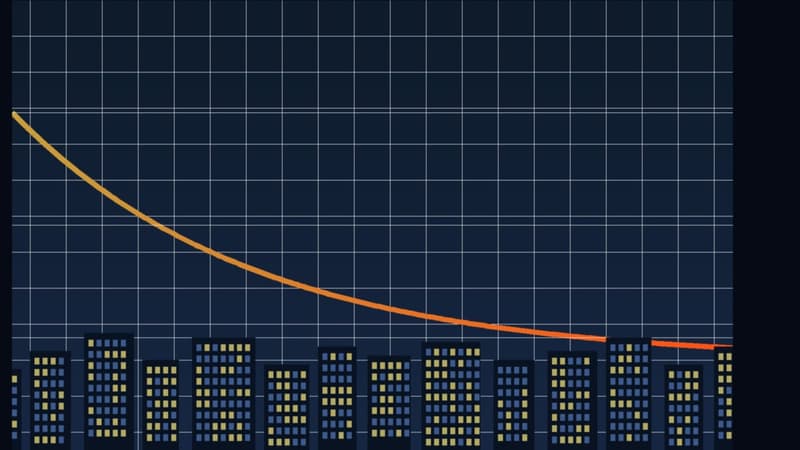
Quantitative Easing and Home Prices: The $8 Trillion Experiment
The Fed bought trillions in mortgage-backed securities to "stabilize" markets. Instead, it created the largest housing bubble in American history.
· 7 min read · By AHI Research
Between 2008 and 2022, the Federal Reserve purchased over $8 trillion in bonds through a program known as quantitative easing. Of that total, approximately $2.7 trillion went directly into mortgage-backed securities — the very financial instruments that package and resell American home loans.
The stated goal was to stabilize financial markets and lower borrowing costs. The actual result was the largest and most sustained housing price inflation in modern history.
What Is Quantitative Easing?
Quantitative easing (QE) is a monetary policy tool where a central bank creates new money electronically and uses it to purchase financial assets — primarily government bonds and mortgage-backed securities (MBS). The theory is straightforward: by buying these assets, the Fed pushes their prices up and their yields (interest rates) down, making borrowing cheaper across the economy.
In practice, QE is money creation on a scale that would have been unthinkable to earlier generations of economists. As Friedrich Hayek wrote in The Denationalization of Money: the monopoly on money creation gives government an almost irresistible tool for expanding its influence over economic life.
Three Rounds, One Result: Higher Home Prices
The Fed conducted QE in multiple phases, each escalating in scale:
QE1 (2008-2010): $1.75 trillion — including $1.25T in MBS purchases
QE2 (2010-2011): $600 billion — Treasury purchases only
QE3 (2012-2014): $1.6 trillion — $40B/month in MBS + $45B/month Treasuries
QE4/COVID (2020-2022): $4.6 trillion — $80B/month Treasuries + $40B/month MBS
Each round correlated directly with housing price acceleration. The Case-Shiller National Home Price Index rose 34% during QE1/QE2, another 28% during QE3, and an extraordinary 42% during the COVID-era QE4.
Correlation isn't causation, but the mechanism is direct. When the Fed buys MBS, it reduces the supply of mortgage debt available to private investors, pushing mortgage rates lower. Lower mortgage rates increase borrowing capacity, which increases the prices buyers can bid on homes.
The MBS Problem: Directly Subsidizing Housing Debt
The Fed's purchase of mortgage-backed securities is particularly damaging because it amounts to a direct government subsidy for housing debt. Unlike Treasury purchases, which affect borrowing costs broadly, MBS purchases specifically reduce the cost of mortgage borrowing relative to other forms of credit.
This creates several distortions:
- Capital misallocation: Artificially cheap mortgage debt pulls investment capital into residential real estate and away from productive business investment, infrastructure, and innovation
- Leverage incentives: When mortgage rates are subsidized below market, buyers are incentivized to take on more debt than they otherwise would, increasing systemic risk
- Price-to-income divergence: Home prices detach from local income levels, creating markets where median earners cannot afford median homes
- Speculation: Cheap financing enables speculative buying — including by institutional investors — that would be uneconomic at market interest rates
The Wealth Effect Illusion
Fed officials frequently cited the "wealth effect" as a justification for QE. The theory: when asset prices rise, owners feel wealthier and spend more, stimulating economic growth. Former Fed Chair Ben Bernanke explicitly described this as a goal of QE policy.
But the wealth effect in housing is an illusion for most Americans. When your home's value rises from $300,000 to $500,000, you haven't gained $200,000 in real wealth, because every comparable home has also risen by a similar amount. You can't capture the gain without leaving the market entirely.
"A rise in the value of your house does not make you richer. It makes housing more expensive." — Adapted from Thomas Sowell
Meanwhile, those who don't own homes — disproportionately young, minority, and lower-income Americans — are genuinely made poorer. They face higher purchase prices, higher rents (which track home values), and a growing barrier to entry.
The Taper Trap: Why the Fed Can't Unwind
By 2022, the Fed recognized that QE had contributed to runaway inflation and began "quantitative tightening" (QT) — allowing bonds to roll off its balance sheet without replacement. But the process revealed a fundamental problem: markets had become dependent on Fed liquidity.
When the Fed stopped buying MBS and began raising rates, mortgage rates doubled from 3% to over 7%. But home prices didn't fall proportionally because sellers simply withdrew from the market. Existing homeowners with 3% mortgages had no incentive to sell and buy at 7%. The result was an inventory crisis that kept prices elevated even as affordability collapsed.
Existing home sales (2025): 4.0 million annualized — lowest since 1995
Active listings: Down 35% from pre-pandemic averages
Homeowners with sub-4% mortgages: ~60% of all mortgaged homes
These homeowners are economically "locked in" — unable to move without dramatically increasing their housing costs.
This is the QE hangover. The Fed inflated a housing bubble so large that unwinding it without a painful correction may be impossible. And the correction, when it comes, will fall hardest on those who bought at peak prices with maximum leverage — exactly the behavior QE incentivized.
The Free-Market Alternative
Austrian economists predicted this outcome. Ludwig von Mises's theory of the business cycle holds that artificially low interest rates create malinvestment — capital flows into projects (like housing speculation) that wouldn't be viable at market interest rates. The longer the distortion continues, the larger the eventual correction.
The free-market prescription is clear: end Fed purchases of mortgage-backed securities permanently, transition to a rules-based monetary policy (such as a Taylor Rule or Friedman's k-percent rule), and allow interest rates to be set by the supply and demand for loanable funds.
This would mean higher mortgage rates in the short term, but rates that reflect reality rather than central bank manipulation. And it would end the systematic inflation of housing prices that has made homeownership unattainable for millions of Americans.
As we explore in our analysis of the broader Fed housing crisis, monetary policy reform is the single most impactful change we could make for housing affordability. Everything else — zoning reform, rent control repeal, subsidy reform — addresses symptoms. This addresses the cause.
Part of the Monetary Policy & Housing research cluster.