Friday Market Recap — March 28, 2026: Rates Surge to 6.38%, the Spring Market Window Slams Shut
· 10 min read · By Affordable Housing Initiative
Five weeks ago, the 30-year fixed mortgage rate briefly touched 5.98% — the first sub-6% reading since late 2023. Purchase applications surged. Buyers who had been waiting on the sidelines began to move. The headline writers called it a spring thaw. This week, that thaw is definitively over. Freddie Mac's Primary Mortgage Market Survey for March 26, 2026 showed the 30-year fixed rate at 6.38% — a gain of 40 basis points from the February low, and the highest reading in more than two months. The 15-year fixed jumped from 5.44% five weeks ago to 5.75% today. For buyers who sized up their qualification at 5.98% in late February, they are now operating in a materially different affordability reality. The spring buying window that briefly cracked open has now slammed shut.
The rate surge does not exist in isolation. On Thursday, the Bureau of Economic Analysis confirmed that Q4 2025 real GDP expanded at just 0.7% annualized in its second estimate — down from 4.4% in Q3 and a sharp downward revision from the advance estimate of 1.4%. The economy is slowing meaningfully. Yet the PCE price index for Q4 came in at 2.9%, with core PCE at 2.7% — both above the Fed's 2% target. Slowing growth plus sticky inflation is the definition of a stagflationary environment, and it places the Federal Reserve in an institutional box from which there is no easy exit: the labor market wants cuts, but the inflation data does not yet permit them, and the Middle East risk premium — explicitly flagged in the March 18 FOMC statement — threatens to make the inflation picture worse before it gets better. For the housing market, stagflation is among the most destructive possible macroeconomic conditions: buyers face both high rates and stubbornly elevated prices, with no clear catalyst for relief on either dimension.
This Week's Core Market Dashboard
| Indicator | Latest Reading | Prior Reading | Change | Source |
|---|---|---|---|---|
| 30-Year Fixed Rate (PMMS) | 6.38% | 6.22% (Mar 19) | +0.16 pp week / +0.40 pp from Feb low | Freddie Mac, Mar 26 |
| 15-Year Fixed Rate (PMMS) | 5.75% | 5.54% (Mar 19) | +0.21 pp week / +0.31 pp from Feb low | Freddie Mac, Mar 26 |
| Federal Funds Rate | 3.50%–3.75% | 3.50%–3.75% | Held (Mar 18) | FOMC, Mar 18 |
| Q4 2025 Real GDP (SAAR) | +0.7% | +4.4% (Q3 2025) | Sharp deceleration | BEA, Second Est. |
| PCE Price Index (Q4 2025) | 2.9% | 2.9% (advance) | Unchanged from advance | BEA, Second Est. |
| Core PCE (excl. food/energy, Q4) | 2.7% | 2.7% (advance) | Unchanged; above 2% target | BEA, Second Est. |
| NAR Pending Home Sales (Feb, MoM) | +1.8% | — | -0.8% YoY | NAR, Mar 17 |
| NAR Existing Home Sales (Feb, SAAR) | 4.09M | 4.02M (Jan) | +1.7% MoM / -1.4% YoY | NAR, Mar 10 |
| National Median Home Price (Feb) | $398,000 | — | +0.3% YoY (32nd consec. gain) | NAR, Mar 10 |
| Housing Inventory (Feb) | 1.29M units / 3.8 mos. | — | +4.9% YoY; still seller's market | NAR, Mar 10 |
| Total Housing Starts (Jan, SAAR) | 1,487,000 | 1,387,000 (Dec) | +7.2% MoM / +9.5% YoY | Census Bureau |
| Single-Family Starts (Jan, SAAR) | 935,000 | 963,000 (Dec) | -2.8% MoM | Census Bureau |
| Building Permits (Jan, SAAR) | 1,376,000 | 1,455,000 (Dec) | -5.4% MoM / -5.8% YoY | Census Bureau |
| NAHB Builder Confidence (HMI, Mar) | 38 | 36 (Feb) | +1 pt — 21st month below 50 | NAHB, Mar 17 |
| NAR Housing Affordability Index (Feb) | 117.6 | 103.1 (Feb 2025) | Highest since Mar 2022 | NAR, Mar 10 |
The Rate Surge: Four Weeks, Forty Basis Points
The PMMS rate trajectory over the past five weeks reads like a cautionary tale about the fragility of affordability windows in a high-rate environment:
| Survey Date | 30-Year Fixed | 15-Year Fixed | Week-Over-Week Change |
|---|---|---|---|
| February 26, 2026 | 5.98% | 5.44% | — (5-week low) |
| March 5, 2026 | 6.00% | 5.43% | +0.02 pp |
| March 12, 2026 | 6.11% | 5.50% | +0.11 pp |
| March 19, 2026 | 6.22% | 5.54% | +0.11 pp |
| March 26, 2026 | 6.38% | 5.75% | +0.16 pp |
The 16 basis point jump between March 19 and March 26 is the largest single-week increase of 2026. The cumulative 40-basis-point move from the February 26 low represents a monthly rate reversal of unusual severity. To understand why, it is essential to recognize what mortgage rates actually track. The 30-year fixed-rate mortgage is priced off the 10-year Treasury yield, with a spread that reflects lender credit risk and market liquidity conditions. The FOMC does not set mortgage rates. What the FOMC does is set the overnight lending rate between banks, but more importantly, it shapes market expectations about the future path of inflation, and those expectations are directly embedded in the 10-year yield.
Three factors drove the 10-year Treasury higher this week, pushing mortgage rates along with it. First, the FOMC's March 18 statement added explicit language about "developments in the Middle East" creating economic uncertainty — language that markets correctly interpreted as an additional barrier to near-term rate cuts. Geopolitical oil risk is inflationary; any Fed statement that acknowledges it signals a higher-for-longer posture. Second, the Q4 GDP deceleration to 0.7% — while superficially dovish — actually complicated the inflation picture by confirming that prior monetary expansion generated persistent price pressures that have outlasted the growth impulse. A slowing economy with sticky inflation is not a recipe for imminent Fed easing. Third, the Chair Powell's March 21 speech — delivered as he accepted the Paul A. Volcker Public Integrity Award from the American Society for Public Administration — contained language worth examining carefully. Powell explicitly invoked Volcker's "willingness to resist short-term pressures in the interest of achieving lasting price stability" and his "courage" in maintaining tight policy "despite political pressure and a painful recession." These are not randomly selected words. They are a signal that the current Fed chair is consciously situating himself in the Volcker tradition of holding firm on inflation regardless of the political and economic discomfort involved.
For buyers, the monthly payment arithmetic is unforgiving. On the national median-priced home of $398,000, a buyer putting 20% down ($79,600) and financing $318,400 faces monthly principal-and-interest payments of:
| Rate | Monthly P&I | vs. Feb 26 (5.98%) | 30-Yr Total Interest |
|---|---|---|---|
| 5.98% (Feb 26 low) | $1,905 | — | $368,218 |
| 6.22% (Mar 19) | $1,951 | +$46/mo | $384,789 |
| 6.38% (Mar 26) | $1,983 | +$78/mo | $395,005 |
An additional $78 per month sounds manageable in isolation. For buyers already at the edge of qualification ratios — households earning the national median income of approximately $78,000 who are stretching to afford a $398,000 home — that $78 per month can mean the difference between a debt-to-income ratio that qualifies for conventional financing and one that does not. The 40-basis-point reversal from the February low has likely pushed several hundred thousand households back below the qualification threshold they briefly crossed during that sub-6% window.
Adjustable-Rate Mortgages: The Partial Relief Valve
Freddie Mac discontinued tracking of adjustable-rate mortgage products in its PMMS survey in November 2022 when it restructured its data collection methodology. ARM rates remain available and active in the market — the Mortgage Bankers Association publishes them weekly in its weekly mortgage applications survey — and they continue to price at a meaningful discount to the 30-year fixed. In the current environment, a 5/1 ARM typically offers an initial fixed rate of approximately 5.60%–5.75%, representing a spread of 60 to 80 basis points below the 30-year fixed. For buyers with a shorter expected holding period — those who anticipate relocating, refinancing, or whose income trajectory justifies the rate-reset risk — an ARM at 5.65% versus a fixed at 6.38% represents a payment savings of roughly $130–$150 per month on the median home. That is real money.
But ARM products require buyers to accept the risk that when their initial fixed period expires, the rate will reset to the prevailing index rate plus margin. In an environment where the Fed funds rate is still 3.50%–3.75% and the policy trajectory is uncertain, ARM borrowers who originate today face meaningful reset risk if rates have not declined materially by 2031. The ARM is a tool, not a solution. Its appropriateness depends entirely on each borrower's time horizon and rate-risk tolerance. What it represents at the market level is evidence that buyers are actively managing the cost of monetary policy's imposition on their purchasing decisions — a market response to a policy-created problem.
GDP at 0.7%: The Stagflationary Trap and Its Housing Consequences
The Bureau of Economic Analysis's second estimate of Q4 2025 GDP, released March 13, confirmed that the U.S. economy expanded at just 0.7% annualized in the final quarter of last year — a steep deceleration from Q3's 4.4% and a sharp downward revision from the advance estimate of 1.4%. For full-year 2025, real GDP grew 2.1%, revised down 0.1 percentage point.
The deceleration reflected downturns in government spending and exports, partly offset by investment. Consumer spending decelerated but remained positive. The more telling figure for housing market purposes is the inflation data embedded in the same report: the GDP price deflator for gross domestic purchases rose 3.8%, and the PCE price index — the Federal Reserve's preferred inflation gauge — came in at 2.9%. Core PCE (excluding food and energy) was 2.7%. These figures are not dramatically above the 2% target, but they are far enough above it that no responsible central banker would interpret them as license for aggressive easing.
The combination of 0.7% real growth and 2.9% PCE inflation creates precisely the policy environment that is most destructive for housing: a central bank that is prohibited from cutting rates by its inflation mandate but also facing pressure to ease from a decelerating economy. Milton Friedman's framework is uniquely explanatory here. The near-zero rate policy of 2020–2021 generated an asset-price inflation that is still working its way through the economy. The rate normalization since 2022 has slowed growth without fully extinguishing the price pressures those years created. The economy is paying the deferred cost of monetary excess, and housing buyers are bearing a disproportionate share of that cost through elevated prices that the inflation episode created and elevated rates that the normalization episode imposed.
For housing construction specifically, the GDP deceleration adds another layer of risk. Builders who are already operating at sub-50 confidence levels (NAHB HMI at 38 for March) now face slowing aggregate demand alongside the material cost pressures from tariff policy. A GDP print of 0.7% raises the probability of a recession scenario. Construction is highly cyclical. Builders who were already reducing starts and cutting prices do not accelerate activity when GDP is trending toward zero.
Powell's Volcker Signal: What the Award Speech Tells Housing Markets
Federal Reserve Chair Jerome Powell's acceptance remarks for the Paul A. Volcker Public Integrity Award, delivered March 21 to the American Society for Public Administration, were not a formal monetary policy statement. They nonetheless contain language that housing market participants should read carefully.
Powell described Volcker as having "the courage and long-term perspective that define principled public service" and specifically noted that Volcker "held firm to his commitment to bring inflation down" despite "political pressure and a painful recession." Powell concluded: "His willingness to resist short-term pressures in the interest of achieving lasting price stability demonstrated the courage and long-term perspective that define principled public service."
The subtext here is not subtle. A Fed Chair who, in the same week that chooses to anchor his public persona to Volcker's inflation-fighting legacy is communicating something about his own policy disposition. The message is: do not expect this Fed to capitulate to political pressure for premature easing. The June 2026 FOMC meeting — the next meeting with a Summary of Economic Projections — is the earliest realistic opportunity for a rate cut. The Powell-Volcker framing suggests the bar for that cut remains high.
From a free-market perspective, there is a deep irony here. Volcker's central banking heroism was necessary precisely because the prior policy of monetary accommodation — the easy-money era of the 1970s — had embedded inflationary expectations that required painful normalization to dislodge. Today's situation has structural similarities: the near-zero rate experiment of 2020–2021, like its 1970s predecessor, generated inflation that has proven stickier than its architects anticipated. The Volcker comparison cuts both ways: it validates the need for steady policy in the current moment, but it also indicts the prior policy decisions that made Volcker-style resolve necessary in the first place.
Housing Supply: The January Data in March Context
The most recently published housing starts and permits data reflects January 2026, released by the Census Bureau in mid-March. Note that government data publication delays — stemming partly from the October–November 2025 federal shutdown that also delayed the BEA GDP release — have pushed the housing starts series approximately one month behind the standard calendar.
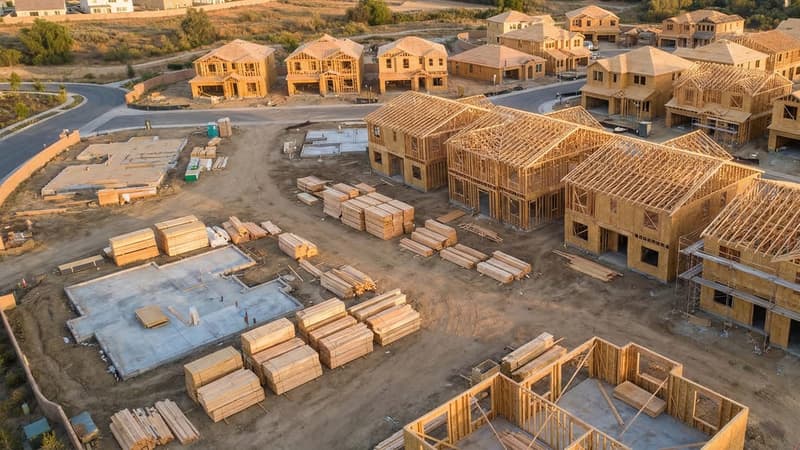
January's headline reading was superficially encouraging: total housing starts at 1,487,000 SAAR, up 7.2% month over month and 9.5% year over year. But the composition mattered. The total jump was driven almost entirely by multifamily starts (apartment buildings). Single-family starts — the unit type most directly linked to homeownership demand — actually declined 2.8% month over month to 935,000 SAAR. Building permits, which lead starts by roughly one to two construction cycles and are thus the most forward-looking indicator of supply, fell 5.4% month over month and 5.8% year over year to 1,376,000 SAAR. Single-family permits came in at 873,000, also negative on a monthly basis.
The divergence between headline starts and what those starts mean for homeownership affordability is precisely the kind of statistical nuance that tends to get lost in summary coverage. The 9.5% year-over-year jump sounds like a construction boom. The actual story is that apartment builders are continuing to execute on a development pipeline they committed to before rates rose further, while single-family builders — who are more sensitive to buyer qualification rates and lot-level economics — are pulling back. The permits data tells the forward story: the single-family supply pipeline is narrowing exactly when it should be expanding.
The NAHB/Wells Fargo Housing Market Index for March 2026 confirmed this at the sentiment level. At 38 — the 21st consecutive month below the 50-threshold — builder confidence is signaling that the structural conditions for a construction recovery are still not in place. The traffic of prospective buyers sub-index, at a deeply depressed 25, is the most operationally relevant component: it measures actual foot traffic at model homes, which correlates closely with forward groundbreaking decisions. Builders do not pour foundations for buyers who are not walking through model homes.
Inventory, Home Prices, and the Lock-In Effect
The most recent existing home sales data — NAR's February 2026 report, covering the period when rates were at or near their five-week low — showed sales at 4.09 million annualized, still 21% below the long-run median of approximately 5.22 million. The inventory picture improved marginally: 1.29 million units on the market, 4.9% higher year over year, but still representing just 3.8 months of supply at the current sales pace. A balanced market requires 5 to 6 months of supply.
The national median home price of $398,000 represented the 32nd consecutive month of year-over-year price increases, even as the pace has slowed to +0.3% — effectively flat in real terms. This is the lock-in effect made quantitative: prices are not falling because sellers who purchased or refinanced at 2.5%–3.0% in 2020–2021 have no financial incentive to list and trade into a mortgage at 6.38%. Every existing homeowner who declines to list is simultaneously a potential seller who chose not to add supply and a potential buyer who chose not to generate demand. The Fed's prior policy experiment has frozen both sides of the transaction simultaneously.
The NAR Housing Affordability Index for February 2026 came in at 117.6 — the highest reading since March 2022, and up substantially from 103.1 a year earlier. An index above 100 means the median American household has sufficient income to qualify for the median-priced home at current rates using standard underwriting ratios. This is genuine progress, driven primarily by wage growth that has been running ahead of home-price appreciation. But that affordability reading was calculated at the February rate environment, closer to 6.00%. At 6.38%, the March affordability index will come in lower. The progress is real; it is also fragile.
Regional Divergence: Supply Policy Written in the Data
The February pending home sales breakdown by region provides a clean natural experiment in how local supply policy interacts with national rate conditions. The Northeast — the region with among the nation's most restrictive zoning, longest permitting timelines, and highest regulatory compliance costs — posted a 12.1% year-over-year decline in pending sales. The South, where development conditions are more permissive and supply has expanded meaningfully, posted a +1.2% year-over-year gain. The West, led by California metros where zoning reform has gained legislative momentum in recent years, gained 3.2% year over year.
Among the 50 largest metros, the pattern of outperformers tells the supply story directly: San Diego (+13.5%), Jacksonville (+12.1%), San Jose (+10.6%). These are markets where either supply has been added, affordability has improved through income growth relative to prices, or zoning barriers have been partially reduced. The bottom of the performance table is predictably dominated by legacy high-regulation markets along the Northeast Corridor, where state and local policy has, for decades, functionally criminalized the construction of new housing at the scale needed to meet demand.
Friedrich Hayek's insight about the price system was that prices communicate information that no central authority can replicate. The regional pending sales data is exactly that kind of information: a distributed signal about which markets have allowed supply to respond to demand and which have not. The Northeast's -12.1% is not an abstract policy critique. It is households voting with their signed contracts, or failing to sign them because the supply that would make those contracts possible does not exist. Zoning is not a neutral land-use instrument. It is a tax on housing production, and the Northeast is paying the bill.
The Policy Trap: Three Levers Pushing Against Affordability Simultaneously
The data this week illuminates, with unusual clarity, a housing market facing three distinct categories of government-generated pressure simultaneously:
1. Monetary policy overhang. The near-zero rates of 2020–2021 inflated home prices to levels that today's buyers, at today's rates, struggle to qualify for. The normalization that began in 2022 was the necessary correction, but it has imposed a dual penalty: higher borrowing costs for buyers and a rate lock-in effect that freezes would-be sellers in place. Q4 GDP at 0.7% and core PCE at 2.7% confirm that the economy is still digesting the consequences of that prior excess. And the Fed, appropriately, cannot cut its way out of a problem that prior cutting created.
2. Trade policy costs. The NAHB's analysis of tariff impacts on home building estimated that tariff actions in place before the March 2026 steel and aluminum escalations already added approximately $10,900 per new home in material and compliance costs. Builders operating at an NAHB HMI of 38 — already cutting prices by an average 6% and offering incentives on 64% of transactions — are unable to absorb both rising input costs and declining demand simultaneously. The tariffs do not protect American homebuyers. They tax them.
3. Zoning and land-use restrictions. The regional divergence in pending sales is the most direct evidence. The Northeast's structural supply deficit — built over decades of exclusionary zoning, minimum lot sizes, parking mandates, and single-family-only zones — means that even when rate conditions improve, the supply cannot respond. The Sun Belt markets that have consistently outperformed have done so precisely because they have been more permissive about supply response. This is not coincidence. It is causation.
None of these pressures originates in market failure. Markets respond to price signals with remarkable efficiency when permitted to do so. The problem is that in the housing sector, government has systematically distorted those signals at the monetary, trade, and land-use levels simultaneously. Thomas Sowell's formulation — that the real question is not whether policy achieves its stated goals but what incentives it creates and what unintended consequences it generates — applies with full force here. Affordable housing policy has, in practice, made housing less affordable at every level of intervention.
Week Ahead
The data calendar for the week of March 30 – April 3, 2026 is lighter on housing-specific releases. The next FOMC meeting is April 28–29, not a Summary of Economic Projections meeting, which reduces the probability of a rate action absent a dramatic deterioration in conditions. The next Freddie Mac PMMS will be published on Thursday, April 2. Investors and buyers alike will watch closely whether the 6.38% rate continues higher or stabilizes.
The more consequential near-term data releases are the March consumer price index (CPI), expected in early-to-mid April, and the February PCE deflator. If either confirms a cooling in core inflation, the June FOMC meeting begins to look like a plausible venue for the first rate cut since September 2025. If inflation remains sticky — as it has for the past several quarters — the higher-for-longer thesis remains intact and the spring buying window, which was already narrowing, may effectively close for the season.
The structural argument for housing supply reform — reducing zoning barriers, rationalizing permitting, ending exclusionary density restrictions — is unchanged and unaffected by weekly rate fluctuations. Whether rates are at 5.98% or 6.38%, a market that cannot build the housing its residents need is a market that will continue to fail them. The rate data tells you where the market is this week. The supply data tells you where housing affordability will be in five years. Both are moving in the wrong direction.
Part of the Market Data & Indicators research cluster.