The Hidden Tax on Housing: How Government Regulation Adds $93,870 to the Price of Every New Home
Permit fees, energy codes, impact charges, and bureaucratic delay have quietly transformed home building into one of the most regulated industries in America, and working families are paying the price at the closing table.
· 8 min read · By Affordable Housing Initiative Editorial Staff
When Milton Friedman sat down with Phil Donahue in 1979 and explained that prices are information, he was making a point that policymakers have since spent decades refusing to absorb. Prices tell us where resources should go. Price floors and price ceilings distort that information. And when government layers cost upon cost into the production of housing — permit fees here, code compliance there, a year-long environmental review over there — it is doing nothing less than implanting false signals deep inside the supply chain of the most essential consumer good there is: shelter.
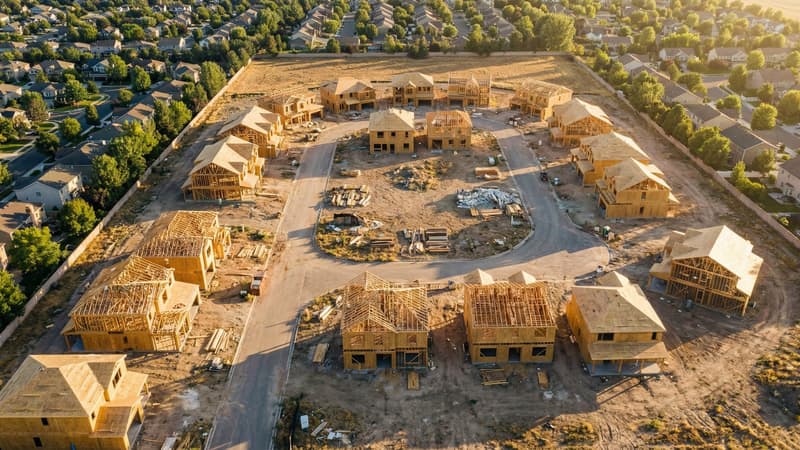
The result is measurable. The National Association of Home Builders (NAHB) has conducted rigorous surveys of the regulatory cost embedded in new home construction for over a decade. Their 2021 study found that regulations imposed by all levels of government account, on average, for $93,870 of the final price of a new single-family home — representing 23.8 percent of the average sales price of $394,300 at the time of the survey. That is not a rounding error. That is nearly one-quarter of the sticker price of a home, extracted by the state before a single family moves in.
The Anatomy of a Regulatory Bill
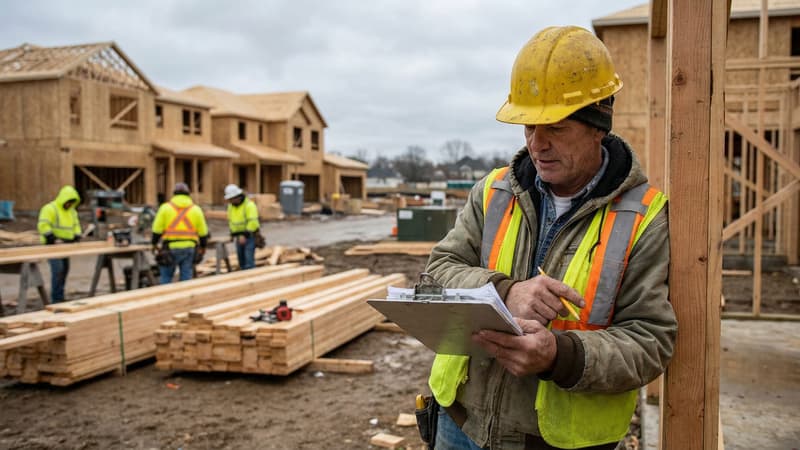
The $93,870 figure breaks down into two distinct buckets. The first — $41,330 — reflects regulatory costs absorbed before a builder even purchases a finished lot. These are costs imposed during the land development phase: environmental reviews, subdivision approvals, infrastructure impact fees, and the carrying costs of waiting months or years for permits that are ultimately routine. The second bucket — $52,540 — reflects regulatory costs during construction itself: building code compliance, mandatory energy upgrades, inspection fees, and more.
Consider how that number has grown. In NAHB's 2011 study, the regulatory cost embedded in a new home was $65,224. By 2016, it had risen to $84,671. By 2021, $93,870. That is a 44 percent increase in the regulatory cost burden in just ten years, compounding silently on top of every home built in America.
And the problem is more acute in the rental market. A 2022 joint study by NAHB and the National Multifamily Housing Council (NMHC) found that regulations imposed by all levels of government account for an average of 40.6 percent of multifamily development costs. When you are trying to build rental housing for working families, the government is effectively your largest line item — before labor, before materials, before land.
Energy Codes: The Mandate That May Never Pay Off
One of the fastest-growing components of the regulatory cost stack is energy building code compliance. The 2021 International Energy Conservation Code (IECC) represents the most stringent residential energy standard ever adopted at the federal level. The Biden administration's HUD and USDA subsequently mandated that they would insure mortgages for new single-family homes only if built to this standard.
Home Innovation Research Labs — the research arm of NAHB — found that compliance with the 2021 IECC can add more than $22,000 to the price of a new home, with some builders reporting actual cost increases of up to $31,000. Critically, payback periods for homeowners — the point at which energy savings recoup the upfront compliance cost — can stretch to 90 years or longer. A 90-year payback period is not a return on investment. It is an inter-generational wealth transfer from homebuyers to the regulatory apparatus.
This is Hayek's knowledge problem made concrete. The energy regulators in Washington do not know which climate zone your home sits in, what your household's energy usage patterns are, or what you could do with the $20,000 to $31,000 they have compelled you to spend on insulation upgrades. The market — through price signals and consumer choice — would have sorted this out with far greater efficiency.
NIMBYism as Regulatory Weapon
Beyond formal code compliance, the NAHB/NMHC multifamily study identified a secondary but potent cost vector: the "Not In My Backyard" phenomenon. Three-quarters of apartment developers surveyed — 74.5 percent — reported encountering NIMBY opposition during the development process. This opposition adds an average of 5.6 percent to development costs and delays project completion by an average of 7.4 months.
Seven-and-a-half months of delay is not abstract. Every month a construction project sits in legal limbo or awaiting a municipal hearing is a month of carrying costs: land loans, construction financing, legal fees, and the opportunity cost of capital that could be building other units elsewhere. Those costs are passed directly to future tenants. Zoning boards that delay affordable apartment projects are not protecting neighborhoods. They are taxing future residents who do not yet live there, and who have no vote in the proceedings that exclude them.
Thomas Sowell noted in Basic Economics that when you restrict the supply of anything while demand remains constant or rises, the price rises. There is nothing mysterious about this. America has restricted the supply of housing through thousands of overlapping regulatory layers, and American housing prices have risen accordingly. The U.S. housing shortage now stands at an estimated 3.7 million units as of Q3 2024, according to Freddie Mac — a deficit that accumulated not through some failure of the market, but through the sustained regulatory suppression of new supply.
Who Pays? The Burden Falls Hardest on the Entry-Level Market
Regulatory costs are largely fixed per project. A $50,000 regulatory burden spread across a $1.5 million luxury condominium is 3.3 percent. The same $50,000 burden on a $200,000 starter home is 25 percent. This is not a neutral, evenly-distributed cost. Regulatory compliance is a regressive tax on housing that hits entry-level construction hardest — precisely the segment of the market most needed to house working families.
The human consequence is visible in the Census Bureau's 2023 American Community Survey data: over 21 million renter households — representing 49.7 percent of all renters — spent more than 30 percent of their income on housing costs. Nearly half of all renters in the United States are cost-burdened. This is not a market failure. This is the predictable outcome of policies that have systematically restricted the supply of affordable housing through regulatory overhead.
A statement before the House Small Business Committee in April 2025 from NAHB Chairman Buddy Hughes made the point plainly: "Regulatory costs, which include complying with building codes, zoning issues, permitting roadblocks and other costly challenges, make up nearly 25% of the cost of building a single-family home and more than 40% of the cost of a typical apartment." The industry that builds the homes where Americans live has been made to operate under one of the heaviest regulatory regimes in the entire economy.
The Path Forward Is Simple — Though Not Easy
The solutions here are not ideologically exotic. They are standard economic prescriptions that any first-year student of Friedman or Hayek would recognize immediately.
First, streamline permitting. A 2025 NAHB impact fee study found that jurisdictional permit fees and impact charges can add thousands of dollars to each home before a nail is driven. A single set of clear, predictable, and timely permit approvals — rather than the current labyrinth of overlapping municipal, county, and state requirements — would reduce both cost and uncertainty for builders.
Second, allow market-driven energy standards. Rather than mandating compliance with the most stringent possible energy code as a condition of federal mortgage insurance, allow buyers and builders to negotiate the right energy package for their circumstances. A buyer in Phoenix weighing the cost of additional insulation against a 90-year payback period is capable of making that calculation without federal compulsion.
Third, reform inclusionary zoning requirements that deter supply. The NMHC data showed that 47.9 percent of apartment developers avoid building in jurisdictions with inclusionary zoning requirements. Policies intended to produce affordable units are instead chasing away the very developers who would build them. This is the law of unintended consequences in textbook form.
The housing affordability crisis has many causes — Federal Reserve monetary policy, exclusionary zoning, the lock-in effect of mortgage rate differentials. But regulatory compliance costs are unique in that they are entirely within the power of government at every level to reduce, starting today. There is no interest rate adjustment required. No constitutional amendment. Only the political will to stop taxing the construction of the homes that American families need.
Milton Friedman observed that the most harm is done by people with the best intentions. The regulations examined here were written by people who wanted efficient buildings, funded schools, and livable communities. The result, piled layer upon layer over decades, is a system that prices working families out of the market — and then blames the market.
Part of the Zoning & Land Use research cluster.