The ROAD to Housing: Supply-Side Policy Finally Takes Center Stage
· 7 min read · By Affordable Housing Initiative
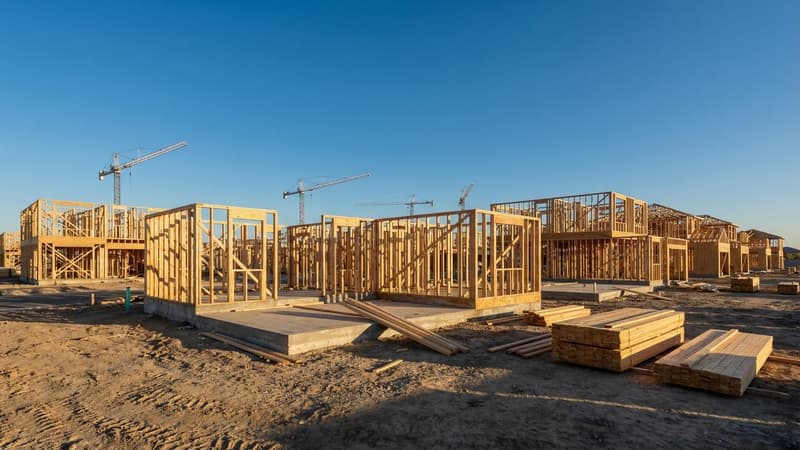
On March 13, 2026, two things happened simultaneously in Washington that housing economists had waited decades to see: the Senate passed the 21st Century ROAD to Housing Act by a near-unanimous 89-to-10 bipartisan margin, and President Trump signed Executive Order 14394, directing federal agencies to systematically dismantle the regulatory infrastructure that makes American homebuilding so expensive. Together they represent the most coherent federal embrace of supply-side housing economics in four decades. The underlying diagnosis — that America's housing shortage is primarily a government-created problem, not a market failure — is correct. Whether the treatment is sufficient depends on a set of structural constraints that neither the White House nor Congress fully controls.
The Regulatory Cost Embedded in Every New Home
Friedrich Hayek's most durable contribution to economics is deceptively simple: prices are information. When housing prices rise persistently faster than wages, the market is communicating that supply cannot meet demand at current prices. The appropriate policy response is to ask what is preventing supply from responding — not to subsidize more buyers into a market that has already priced out the previous cohort.
The answer, documented extensively and confirmed by the White House Council of Economic Advisors, is regulation. Government regulations at all levels added more than $90,000 to the final price of a new single-family home in 2021, according to analysis cited in the White House fact sheet accompanying Executive Order 14394. That figure encompasses permit fees, impact charges, land-use compliance costs, environmental review delays, and building code mandates — each individually defensible, collectively prohibitive.
Among the most significant single contributors: energy and "green" building mandates embedded in state and local codes. Some states and localities require prescriptive energy requirements that add more than $30,000 to the cost of a single home, per Council of Economic Advisors analysis cited in the same fact sheet. These mandates are not inherently unreasonable on environmental grounds. But they are rarely evaluated against their most direct cost: pricing the entry-level buyer out of the new construction market entirely, and thereby ensuring that the homes that would relieve supply pressure never get built.
The 30-year fixed mortgage rate stood at 6.22% as of mid-March 2026, according to Federal Reserve Economic Data, the highest level in months. At that rate, a $400,000 home (modest by many coastal standards) requires a monthly payment exceeding $2,100 before taxes, insurance, or HOA fees. The demand-side math is brutal. The supply-side math explains why prices reached $400,000 in the first place.
What Executive Order 14394 Actually Does
The executive order, published in the Federal Register on March 18, 2026, is structured around five distinct regulatory attack vectors — each targeting a different layer of the cost stack that has made American homebuilding among the most regulated economic activities in the developed world.
First, water permitting reform. The EPA Administrator and Secretary of the Army are directed to review and revise stormwater, wetlands, and Clean Water Act Section 404 permitting requirements to reduce construction costs and streamline approvals. CWA 404 permitting — which governs the discharge of fill material during grading and construction — has been a tool for project delay and challenge for decades. The order specifically targets construction general permits, post-construction stormwater requirements, and federal standards for dredge-and-fill operations.
Second, NEPA categorical exclusions. The Council on Environmental Quality is directed to issue guidance maximizing the use of categorical exclusions — exemptions from full environmental impact review — for housing construction. This is potentially the most impactful provision in the order. NEPA review requirements have been weaponized by opponents of housing development as a near-costless delay mechanism; a categorical exclusion framework would remove that lever for projects that clearly pose no significant environmental impact.
Third, energy and efficiency mandate reform. The Secretaries of Agriculture, HUD, and Energy, along with the FHFA Director, are directed to eliminate or reform overly burdensome energy and water efficiency requirements, including for manufactured homes. This directly addresses the $30,000 green code problem. Manufactured housing has been particularly affected by federal efficiency mandates that increased unit costs without proportional benefit to buyers who are the least able to absorb them.
Fourth, historic preservation streamlining. The Advisory Council on Historic Preservation is directed to simplify Section 106 reviews for housing projects. Historic preservation review has become a procedural bottleneck in dense urban markets where nearly any significant new construction triggers review obligations.
Fifth, Opportunity Zone alignment. The order calls for aligning Opportunity Zone tax incentives with single-family home development and New Markets Tax Credit programs — a mechanism to direct private capital toward construction in underserved areas without new appropriations.
Critically, the order attacks the cost stack rather than subsidizing demand. This is the correct intervention. Every dollar of demand subsidy that reaches a market with constrained supply is partially or fully captured by higher prices — a dynamic documented in the data on down payment assistance programs, which raise home prices 4.1% on average. The EO does the opposite: it tries to make building cheaper and faster, so the market can produce more homes at lower prices without a government check attached.
The ROAD Act: Supply Wins, and One Contradiction
The 21st Century ROAD to Housing Act, passed 89-to-10 by the Senate, contains more than 40 separate provisions. The supply-side wins are real and concrete.
The manufactured housing chassis reform alone could reduce unit costs by up to $10,000 by eliminating the "permanent chassis" requirement that has restricted where manufactured homes can be legally placed. Manufactured homes are the most cost-effective form of new housing construction available in the American market, and have been systematically burdened by federal rules that do nothing to improve safety but substantially limit their deployment as a supply solution.
NEPA streamlining provisions in the bill — including categorical exclusions for certain housing construction activities — complement the executive order. Zoning incentive grants, directing HUD to publish best-practice standards and offer financing to state and local governments that increase housing supply through by-right development and streamlined permitting, are the correct tool for a federal system that cannot mandate local land-use reform. Thomas Sowell's observation applies precisely: you cannot make housing more affordable by making it more expensive to produce; every provision that reduces construction cost or approval delay moves in the right direction.
The bill's single philosophically inconsistent provision is Section 901 — the "Homes Are For People, Not Corporations Act" — which would ban entities owning 350 or more single-family homes from acquiring additional properties (with a limited exception for new builds sold within seven years). The provision is practically limited in scope: institutional investors own less than 3% of single-family homes nationally. But the principle matters. Banning a category of buyer does not create supply; it restricts market activity while leaving the supply constraints that created unaffordability entirely intact. Milton Friedman's framework is unambiguous: the problem with any price or market intervention is that it treats symptoms rather than causes. The investor ban is exactly that — political messaging dressed as housing policy.
The Federalism Constraint No Executive Order Can Solve
The most important limitation of both the EO and the ROAD Act is structural, not political. The highest-cost regulatory barriers to housing production are at the state and local level. Neither Congress nor the White House can compel states or cities to change their zoning, their permitting timelines, or their building codes.
The EO can reform federal environmental permitting. It cannot compel California to shorten its CEQA environmental review process. It can align Opportunity Zone incentives with single-family construction. It cannot force a California coastal city to allow by-right infill development. The ROAD Act offers grants to localities that adopt best practices — a federalism-respecting mechanism, but one that depends on voluntary participation by exactly the jurisdictions most resistant to deregulation.
This is not a critique of the approach. Federal mandates on local zoning would raise serious constitutional concerns and would likely produce far more litigation than development. The grant incentive model is the appropriate tool. But policymakers and the public should understand its limits: jurisdictions that have spent decades restricting housing supply are unlikely to reverse course in exchange for a federal grant, particularly when the political beneficiaries of restriction — existing homeowners — vote at higher rates than the buyers priced out of the market.
What the Data Will Show
The EO gives federal agencies 60 days to promulgate NEPA categorical exclusion guidance for housing construction. HUD has a similar 60-day window to publish zoning best-practice standards. The manufactured housing chassis rule change, if fully implemented, could produce measurable supply-side effects within two to three years in states that have already reformed their placement laws.
The honest forecast is incremental improvement in permitting costs and timelines in the subset of markets where federal regulatory overlap is the binding constraint, primarily suburban and exurban markets. In the high-cost coastal cities where the affordability crisis is most acute, the binding constraint is local zoning, and the federal tools available are advisory rather than mandatory.
The correct benchmark is not whether these policies solve the housing crisis in a single legislative cycle — they will not — but whether they establish the right analytical framework for what does. For the first time in decades, the federal government is articulating, in law and executive action, that housing unaffordability is a supply problem caused by regulatory cost and delay, not a market failure requiring demand subsidy. That diagnostic shift matters. Policy follows diagnosis. If the diagnosis is correct and durable, the policy eventually follows.
The Standard That Matters
Hayek argued that the price system aggregates information no central planner can replicate. The corollary in housing is equally important: when government has suppressed supply through regulation, removing that regulation allows the market to do what it does naturally when allowed to function — produce more homes at lower costs to meet the demand that exists. No appropriation required.
The ROAD Act and Executive Order 14394 are the most supply-side-coherent federal housing interventions in four decades. They are imperfect — the investor ban is philosophically backwards, and neither instrument can override the NIMBYism embedded in local zoning culture. But their intellectual foundation is sound. The question now is execution: whether agencies will implement the permitting reforms aggressively, whether the grant incentives will move enough localities, and whether Congress can finish the legislative work before the political window closes. The architecture is right. The construction, as always with housing policy, is what matters.
Part of the Zoning & Land Use research cluster.