The Zoning Tax: How Land-Use Regulations Silently Add $94,000 to Every New Home
· 5 min read · By Affordable Housing Initiative
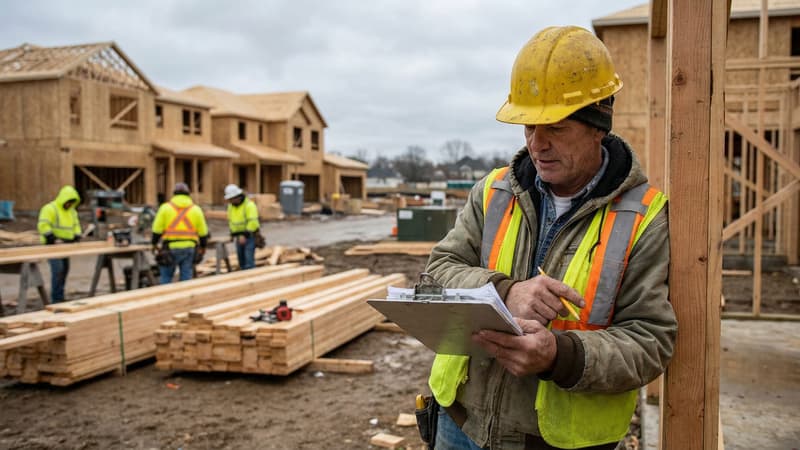
When Americans ask why they can't afford a home, the conversation usually gravitates toward mortgage rates, lumber prices, or developer profits. These are real costs. But there is a larger, less visible levy baked into every new home's price tag — one that politicians didn't vote for openly and buyers never consented to. According to the most comprehensive national survey of homebuilders, government land-use regulations now account for nearly 24% of the final cost of a new home, or roughly $94,000 per unit. Economists have a name for this: the zoning tax.
What the Zoning Tax Is — and How It Works
The term "zoning tax" was formalized by Harvard economists Edward Glaeser and Joseph Gyourko in their landmark 2002 paper, "The Impact of Zoning on Housing Affordability" (National Bureau of Economic Research). Their method was elegant: in a competitive market, the sale price of a home should approximate its marginal cost of production — the cost to build the next unit. Where prices significantly exceed construction costs, the gap represents a regulatory premium. That premium is the zoning tax.
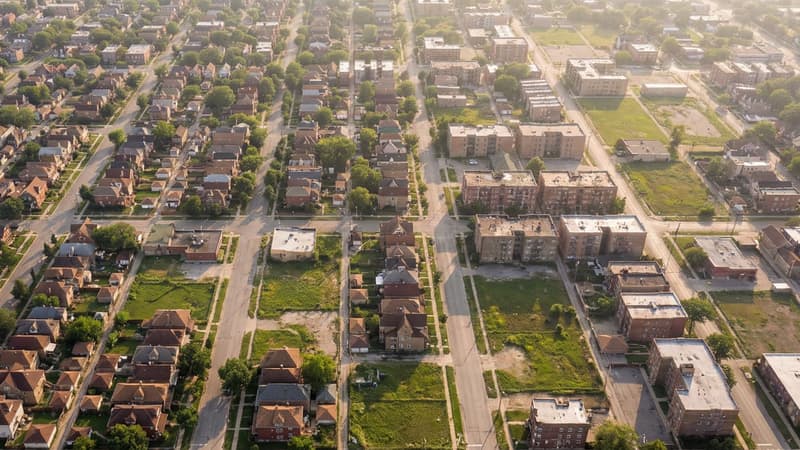
In Houston, where land-use regulation is minimal, new homes sell close to their construction cost. In Manhattan, San Francisco, or Boston, the same home might cost two, three, or five times more to buy than to build — not because of materials or labor, but because of what the law prohibits. Minimum lot sizes, height limits, parking minimums, setback requirements, design review boards, environmental impact assessments — each adds delay, cost, and uncertainty that builders must price into the final product.
The National Association of Home Builders and the National Multifamily Housing Council quantified this in their Cost of Regulations report: across a national survey of developers, regulatory compliance costs — spanning zoning approvals, impact fees, permitting fees, and mandated design changes — account for approximately $93,870 of the average new single-family home's price. That figure breaks down between costs absorbed during site development and costs imposed after lot purchase. Both are ultimately borne by the buyer.
A GDP-Scale Distortion
If the zoning tax merely inconvenienced homebuyers in expensive coastal cities, it might be dismissed as a local governance problem. The evidence suggests the damage runs far deeper.
In a widely cited 2019 study published in the American Economic Journal: Macroeconomics, economists Chang-Tai Hsieh and Enrico Moretti estimated that housing supply constraints in high-productivity cities — New York, San Francisco, San Jose — lowered aggregate U.S. GDP by 36% between 1964 and 2009. The mechanism is labor misallocation: when workers cannot afford to live near high-productivity employers, they remain in lower-productivity regions. The economy loses the output they would have generated.
This is precisely the dynamic Friedrich Hayek described in his critique of central planning. Prices, in a free market, are information. They signal where resources are needed and where opportunities exist. When zoning regulations distort land prices and artificially prevent density in economically dynamic areas, the price signal is suppressed. Workers who might move to San Jose read a housing market that says "you cannot afford to live here" — a message produced not by scarcity of land or labor, but by law.
The result is not just unaffordable housing; it is a permanently smaller economy. Hsieh and Moretti estimated that relaxing land-use constraints in just the three most regulated metro areas to the level of the median U.S. city would have increased national GDP by nearly 9% per year by 2009.
The Supply Gap the Zoning Tax Created
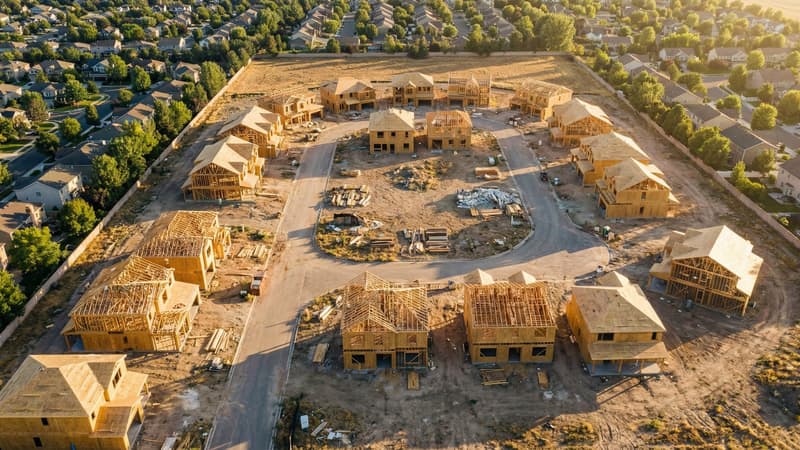
The aggregate effect of five decades of restrictive land-use regulation is a structural housing shortage of historic proportions. Zillow's 2024 research estimates the U.S. is short 4.5 million homes, up from 4.3 million the prior year. In 2022, 1.8 million new households formed while builders completed just 1.4 million units — a structural annual deficit that compounds year after year.
The Federal Reserve's FRED database shows total housing starts have not returned to their pre-2008 levels in any sustained way. The NAHB reported that total building permits in 2024 reached 1.47 million — a 2.6% decline from 2023, and well below the 1.5–2 million annual pace most demographers say is needed to close the shortage gap.
Thomas Sowell, writing in The Housing Boom and Bust, identified this dynamic with characteristic precision: the problem is not that builders lack the desire to build or that Americans lack the desire to buy. The problem is that local governments have erected a legal architecture that makes building economically impossible in the places where it is most needed. "Contrary to the vision of the left," Sowell observed, "it was the free market which produced affordable housing — before government intervention made housing unaffordable."
Houston: The Natural Experiment
The most instructive data point in this debate is a city, not a study. Houston, Texas, is the only major U.S. city with no formal zoning ordinance. Development is guided by deed restrictions and market signals rather than municipal land-use law. The results are not subtle.
According to the Houston Public Media's January 2025 report on a national real estate study, Houston ranks second nationally for rent affordability among major metros. The median single-family home price in Houston was approximately $335,000 as of early 2026 — compared to roughly $900,000 in San Jose and $1.3 million in San Francisco, cities with comparable or lower land costs but far heavier regulatory burdens.
Houston is not without its challenges — flood management, infrastructure sprawl, equity concerns in deed-restricted communities. But its housing market demonstrates a fundamental market principle: when supply is permitted to respond to demand, prices stabilize. The zoning tax does not exist where zoning does not exist.
The Reform Imperative
A growing body of state-level evidence reinforces the Houston lesson. NAHB's November 2024 analysis of zoning regulation noted that states and municipalities pursuing supply-side deregulation — allowing accessory dwelling units by right, eliminating minimum parking requirements, streamlining permitting — consistently outperform restrictive jurisdictions on housing production metrics.
The Federal Reserve Bank of Minneapolis studied rent and permitting trends following Minneapolis's 2040 Plan, which eliminated single-family-only zoning citywide. The picture is complex — multifamily permitting subsequently fell alongside a broader market correction, but the underlying framework principle holds: removing legal barriers to density is a necessary (if not sufficient) condition for supply expansion.
The policy prescription is not radical. It requires no new public spending. It demands no government construction program. It simply requires that local governments stop charging the zoning tax — stop imposing the legal barriers that prevent builders from responding to a market that is, by any measure, screaming for more supply.
Milton Friedman's insight about the free market applies with particular force to housing: prices are the most efficient mechanism society has for coordinating supply and demand. Every setback requirement, every design review delay, every impact fee is a price signal suppressed. The result — 4.5 million missing homes, a $94,000 hidden tax on every new unit, and a GDP permanently smaller than it should be — is not a market failure. It is a policy failure, and a knowable, measurable, correctable one.
Part of the Zoning & Land Use research cluster.