The Permitting Labyrinth: How Bureaucratic Delays Are Pricing Americans Out of New Homes
Before a single nail is driven, developers must survive years of government approvals. The costs don't disappear. They compound, and they are passed directly to buyers and renters.
· 5 min read · By Affordable Housing Initiative
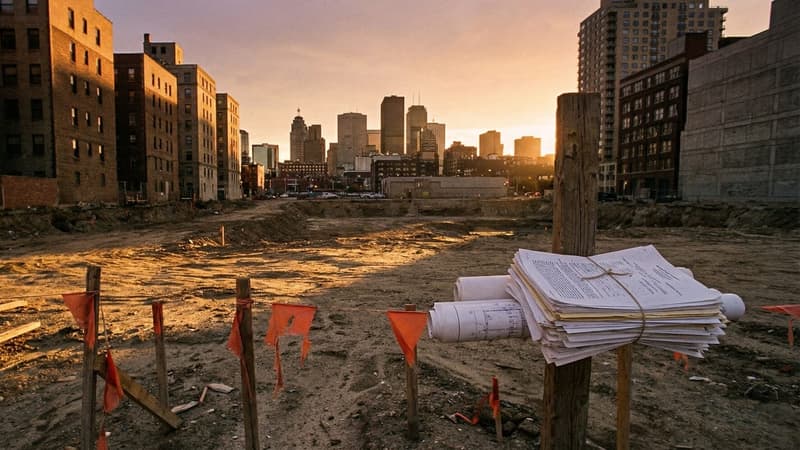
America is 3.7 million homes short — not according to a partisan think tank, but according to Freddie Mac's November 2024 analysis of long-run housing demand versus existing stock. Politicians of every persuasion acknowledge the problem. The standard policy response is to call for more subsidies, more voucher programs, more publicly financed construction. What receives far less attention is what happens before a single unit can be built: the entitlement and permitting gauntlet that consumes months or years of developer time, generates tens of thousands in carrying costs, and introduces enough regulatory uncertainty to kill projects before a shovel touches the ground.
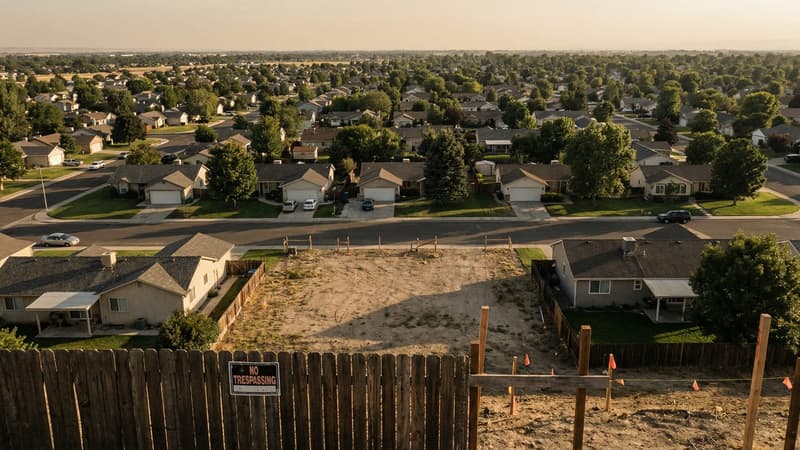
Time is not a neutral variable in housing development. It is a cost. It compounds daily, accumulates silently, and is ultimately passed to the buyer or renter at the end of the chain. Every month a project waits for a permit decision, the developer is paying interest on a construction loan, property taxes on an idle lot, and — if the land isn't yet owned — option payments to the landowner. These costs flow directly into the price of every unit eventually produced, assuming the project survives the wait at all.
The Scale of the Delay Problem
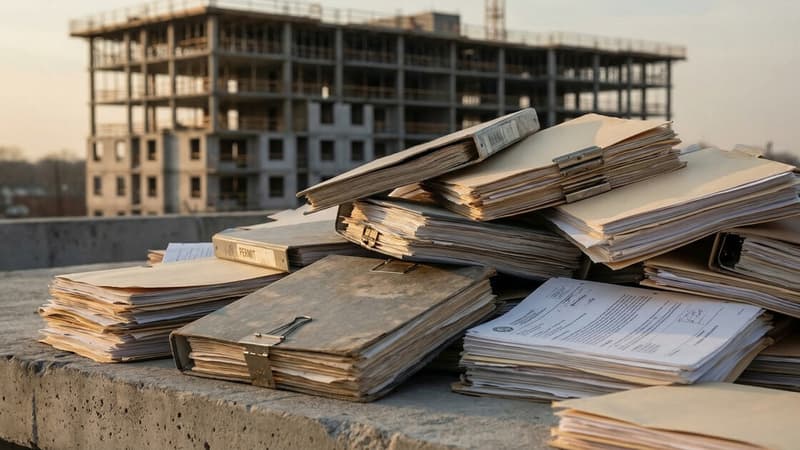
A 2025 Washington State report, commissioned under SB 5290 and analyzed by the Building Industry Association of Washington, provided a rare, legally mandated look at how far permit processing deviates from statutory requirements. The findings were damning: construction permits were being processed 81% longer than the law allows. Subdivision permits faced delays of nearly 200%. Nearly half of all permits reviewed were processed more than 90 days past their statutory deadline, with an average delay of 143 days — and an estimated $157,300 in unexpected project expenses per permit.
The worst offenders were not marginal outliers. King County — encompassing Seattle, the most supply-constrained major city on the West Coast — processed permits with an average delay of 1,557 days. That is more than four years. At prevailing construction loan rates, those delays generated more than $243,000 in carrying costs per project before construction had begun. The City of Kirkland granted itself 730 days to approve a single construction permit. The City of Edmonds: 540 days. The City of Bainbridge Island imposed deadlines for multifamily permits ranging from 275 to 315 days — roughly double what statute authorizes. These are not administrative failures; they are structural choices by jurisdictions that bear no market consequence for the delays they impose.
A National Pattern
Washington State's data is not unique. It is simply unusually well documented. In February 2025, the National Association of Home Builders testified before the Senate Environment and Public Works Committee that federal permitting inefficiencies are among the most significant cost drivers in new housing production. NAHB Chairman Carl Harris told lawmakers that most land developers had been forced to abandon viable parcels not because of unsuitable land or absent demand, but because regulatory timelines made the project economics unworkable.
The federal dimension compounds local delays. Obtaining a Clean Water Act Section 404 permit — triggered whenever any portion of a development parcel may involve "waters of the United States" — takes upwards of one year. When the Endangered Species Act requires a formal consultation, that process can add years more. The developer who could have produced housing for a ready market instead waits, paying, while bureaucratic review unfolds on its own schedule.
Hayek's Warning, Applied to a Permit Queue
Friedrich Hayek's central insight about the limits of central planning was fundamentally about information. No planner possesses the dispersed, local, real-time knowledge that market participants use to allocate resources. A planning department operating on a 730-day review timeline is, by definition, making decisions on outdated market data. The conditions that made a project viable at submission may have reversed by the time a decision arrives. Interest rates move. Labor markets tighten or soften. Demand shifts. The developer who could have responded dynamically is instead frozen, bearing costs, while the bureaucratic process grinds forward on its own logic.
Thomas Sowell made the complementary observation: government policies are evaluated by their stated intentions, while market outcomes are judged by their actual results. Permitting delays are almost universally defended on grounds of thoroughness, environmental stewardship, or community input — all legitimate values. But the result of unbounded review periods is fewer homes, higher prices, and a housing crisis that deepens year after year, regardless of the intentions that produced the system.
The Cost Passes Through — To Every Buyer
NAHB's landmark 2021 study found that government regulation at all levels accounts for $93,870 — 23.8% — of the average new single-family home's price. Of this, $41,330 originates in regulations imposed during lot development: the land use approvals, environmental reviews, and permitting processes that precede construction entirely. This regulatory markup is not absorbed by developers as a business loss. It is priced into the final sale, making every new unit less affordable before a foundation is poured.
A separate analysis of multifamily development found that opposition-driven delays — appeals, public hearings, litigation — add an average of 7.4 months to project timelines and 5.6% to total development costs. On a 100-unit apartment building costing $25 million to develop, that 5.6% represents $1.4 million — costs that translate directly into higher rents for every tenant who ultimately occupies the building.
Reform Works — When It Happens
The evidence that permitting reform improves housing production is not theoretical. Arizona's Permit Freedom Act established mandatory decision timelines for permit approvals and created automatic approval mechanisms when agencies miss their deadlines. The principle is simple and correct: developers can underwrite known timelines. They cannot underwrite indefinite delay. Certainty — even about an unfavorable outcome — has economic value. Endless review has none.
California's ADU reforms from 2016 to 2020 provide the most dramatic national case study. By stripping away local permitting discretion for accessory dwelling units and establishing ministerial approval standards, California generated a surge in ADU permit applications from roughly 5,000 per year to more than 22,000. That transformation cost taxpayers nothing. It required only that government remove the barriers it had placed in the market's path.
The Policy Imperative
Addressing the permitting crisis does not require a choice between environmental protection and housing production. It requires bounded review periods with enforceable deadlines, automatic approval or denial at the expiration of the statutory window, and streamlined ministerial approval for projects that meet pre-established objective criteria. These are not radical proposals. They are the standard expectation in any well-functioning administrative system.
Markets respond to demand with remarkable speed when allowed to do so. What they cannot do is produce housing while waiting four years for a permit decision. America's 3.7 million-unit housing shortage will not be resolved by subsidizing demand into a supply-constrained market. It will be resolved by making it economically viable and administratively predictable to build. The permitting labyrinth is not a natural feature of the housing market. It is a government construction, and it can be dismantled by the same government that built it.
Part of the Zoning & Land Use research cluster.