The Urban Growth Boundary Trap: How Planning Lines Price Americans Out of Homeownership
Oregon drew a line around its cities in 1973 to prevent sprawl. Fifty years later, that line is a wall, and it has turned land inside it into a rationed commodity, inflating Portland home values to more than half a million dollars while households earning 60% of median income can afford rent in fewer than half of city neighborhoods.
· 5 min read · By Affordable Housing Initiative
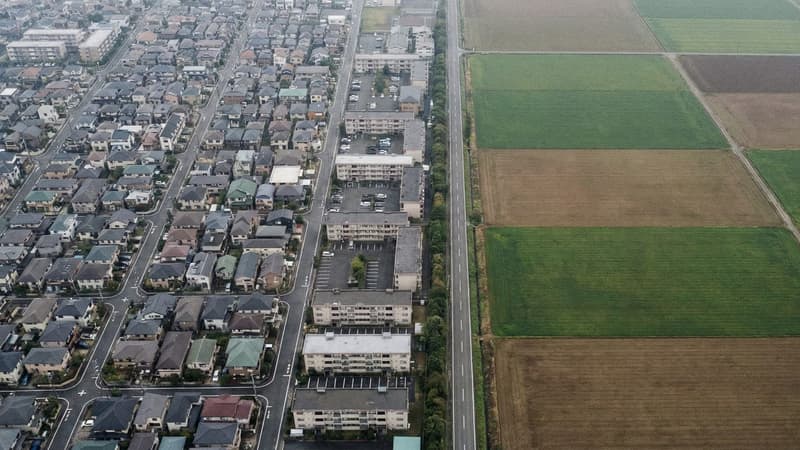
In 1973, Oregon Governor Tom McCall persuaded the state legislature to pass Senate Bill 100 — the nation's first statewide land-use planning law. The intent was sympathetic: protect Oregon's farmland and forests from suburban sprawl. The mechanism was a hard boundary drawn around every major city and metropolitan area, beyond which residential development would be tightly restricted. What no one adequately modeled was the economic consequence of turning the supply of developable land into a government-controlled monopoly.
A Line Becomes a Price Floor
Markets are efficient allocators of scarce resources, but only when scarcity arises from genuine physical limits — not regulatory fiat. Oregon's Urban Growth Boundary (UGB) created an artificial scarcity: land just outside the line is often indistinguishable in physical terms from land just inside it, yet only one side can be developed for housing. The immediate economic result is predictable to anyone familiar with supply-and-demand: land inside the UGB commands a premium precisely because the supply of substitutes has been legally eliminated.
Research published in the Journal of the American Planning Association confirmed this price effect empirically, finding that Portland's UGB materially inflated housing prices in spatially disaggregated census data going back to the boundary's early implementation years. A 2014 study on urban growth boundaries and land prices similarly found that land values rose substantially inside a UGB after enactment but showed no comparable appreciation outside the boundary — precisely the pattern you'd expect when supply is administratively capped on one side of an arbitrary line.
The Federal Housing Finance Agency's All-Transactions House Price Index for the Portland-Vancouver-Hillsboro MSA, tracked by the Federal Reserve Bank of St. Louis, shows a long-run appreciation curve that closely tracks the UGB's increasing constraint as Metro — Portland's regional planning agency — shifted from regularly expanding the boundary to meet demand, to prioritizing density infill instead. Today, the average home value in Portland sits at approximately $546,302 — compared to a national median of roughly $489,000 — while Portland's median price per square foot of approximately $307 reflects the premium imposed on a constrained land supply.
The Knowledge Problem in Land Use
Friedrich Hayek's central insight in "The Use of Knowledge in Society" (1945) was that no central planner can possess the dispersed, local, tacit knowledge necessary to make efficient resource-allocation decisions. The price system, in a free market, aggregates that knowledge automatically — through the voluntary decisions of millions of individuals acting on their own preferences and information. Override the price system with a planning boundary, and you replace this distributed intelligence with the necessarily limited perspective of a regional planning commission.
Metro's planners in the 1990s made a consequential decision: instead of expanding the UGB to meet growing housing demand, they would redirect that demand toward higher-density infill development. The theory was that density would keep housing affordable while preserving open land. The outcome was the opposite. As a February 2026 report from the Cascade Policy Institute documents, the "affordable" housing now being built under Metro's strategy costs an average of $548,000 per apartment — $942 per square foot — in publicly subsidized mid-rise developments, compared to a market rate of roughly $307 per square foot for existing Portland housing. A planning agency responding to a housing cost crisis by building units that cost three times the market rate is a textbook illustration of what Hayek warned against: central coordination producing outcomes that no participant in a functioning market would voluntarily choose.
What Density Mandates Cannot Fix
Metro's planners knew this dynamic decades ago. A 1997 study of Portland housing co-authored by a Portland Bureau of Housing staff member — cited in Cascade Policy's recent report — explicitly found that "housing development costs rise dramatically as building height and housing density increase." The political logic of density mandates is clear enough: telling constituents their city will grow up rather than out sounds responsible. But the economic logic runs in the opposite direction. Taller buildings require deeper foundations, more structural steel, elevators, and fire suppression systems. Replacing a two-story walkup with a five-story concrete-podium building doesn't merely add floors — it shifts the entire cost structure of construction into a fundamentally more expensive category.
Meanwhile, survey data cited by the Cascade Policy Institute finds that roughly 80% of Americans prefer single-family homeownership when given the choice. A planning regime that systematically overrides that preference isn't correcting a market failure — it's substituting one set of preferences (planners') for another (residents'). Milton Friedman was characteristically direct on this point: voluntary exchange, where both parties gain, is the only reliable mechanism for determining what people actually want. A planning commission imposing density on unwilling buyers is not improving welfare; it is merely redistributing it from homebuyers to the ideological preferences of planners.
The Affordability Verdict Is Already In
Portland's 2024 State of Housing report delivers the verdict plainly: the average three-person low-income household earning 60% of Area Median Income ($63,720 per year) could afford to rent a two-bedroom unit in only 11 out of 23 Portland neighborhood areas. Housing costs continue to outpace incomes. After fifty years of the nation's most celebrated land-use planning experiment, the city with the country's first UGB cannot house its working class in more than half its neighborhoods.
The UGB has been expanded approximately three dozen times since it was first drawn in the late 1970s, reflecting an implicit acknowledgment that the boundary was always somewhat arbitrary. But each expansion is a bureaucratic process — subject to political negotiation, environmental review, and Metro Council approval — rather than a market signal responding in real time to where people want to live and work. The supply of land available for housing is rationed through a political process rather than priced through a market, and the result is exactly what price theory predicts: persistent scarcity, persistent unaffordability, and a growing gap between the housing people want and the housing they can access.
The Free-Market Alternative
The solution is not to draw the line differently, or to mandate that more density be built inside it. The solution is to allow the market to determine where development occurs, subject to genuine externality constraints — not administrative preferences for where planners wish people lived. Oregon could follow the lead of states that have begun preempting exclusionary local zoning, or it could simply require that UGBs expand automatically when housing vacancy rates fall below a defined threshold — replacing a political process with a market-responsive rule.
Thomas Sowell has observed that there are no solutions, only trade-offs. The trade-off Oregon accepted in 1973 was to exchange housing affordability for agricultural preservation and a particular aesthetic vision of compact cities. That was a choice. What is not honest is pretending that choice was costless, or that the half-million-dollar homes and 11-out-of-23-neighborhood affordability crisis are somehow unrelated to the line on the map. They are the line on the map, expressed in dollars.
Part of the Zoning & Land Use research cluster.