The Lawsuit Tax on Starter Homes: How Construction Defect Liability Laws Gutted the Condo Market
· 5 min read · By Affordable Housing Initiative
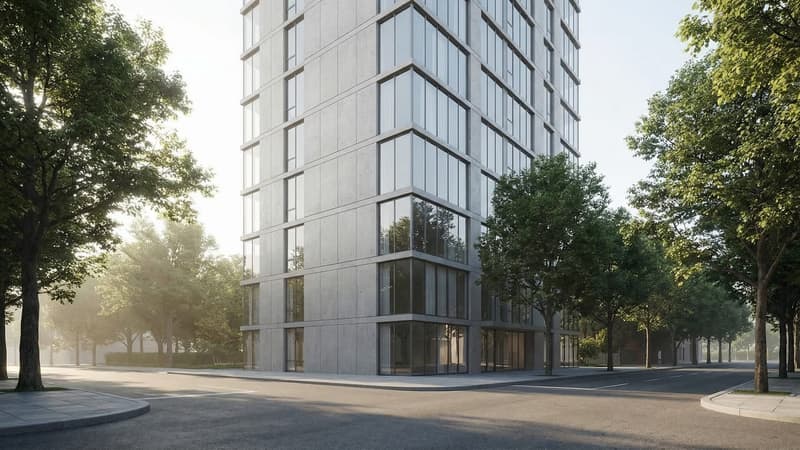
America's most affordable path to homeownership — the condominium — has all but vanished from new home production. It did not disappear because buyers stopped wanting them. Demand remains robust: according to the Common Sense Institute, in Colorado there were 30 condo resales for every single new condo sale in 2022, compared to just 2.4 resales per new sale in 2005. The market signal was unambiguous. The supply response was not.
The reason is not mysterious. It is the entirely predictable result of a legal regime that has made building condominiums for sale an economically irrational act. Across California, Colorado, Texas, and most major housing markets, construction defect liability laws have transformed the condo from a profitable product into an open-ended legal liability — one that follows developers for a decade or more, generates contingency-fee lawsuits from plaintiff attorneys who solicit HOA boards as the litigation window approaches, and forces insurance costs so high that developers simply build rental apartments instead. The consequences are felt most acutely by first-time buyers, young professionals, and retirees who needed the product that no longer exists.
Thomas Sowell observed that there are no solutions, only trade-offs. The trade-off embedded in today's construction defect liability framework is that laws designed to protect homebuyers from defective construction have, in practice, priced them out of the only type of home they could afford.
A Market in Freefall
The data from California and Colorado — two of the nation's most supply-constrained markets — document the same collapse.
A 2025 study commissioned by UC Berkeley's Terner Center and SPUR, prepared by Economic & Planning Systems (EPS), found that new condominium units in both the Bay Area and Southern California had dropped by 90 percent from their peak in 2005–2006. Not a cyclical dip, and not a temporary slowdown. Ninety percent represents a near-total collapse of for-sale multifamily production in the two largest housing markets in the state, sustained over two decades despite population growth and record home prices.
Colorado's numbers, documented by the Common Sense Institute, are equally stark. Condo development between 2018 and 2022 across eleven Front Range counties — home to more than 80 percent of Colorado's population — was 76 percent lower than the 2002–2008 baseline. What was once a roughly 1-to-1 ratio of condos to apartments has inverted: developers were building 14 new apartment units for every single new condo. The number of unique condo developers active in the state fell 84 percent, from 146 builders in 2007 to just 23 by 2022.
According to reporting by TSS Colorado, the condo's share of new housing construction has collapsed from approximately 20 percent of the market to just 3 percent over the past 17 years. In Houston and Dallas-Fort Worth — metros that added hundreds of thousands of new residents during this period — condominium unit starts ran more than 70 percent below their 2002–2008 levels.
The Insurance Multiplier
The mechanism behind this collapse is not complex. Construction defect liability laws in California, Colorado, Florida, and other high-litigation states expose condo developers to lawsuits for years or decades after project completion. California's statute of repose runs ten years, longer than the national average. Under California law, homeowner associations (HOAs) can initiate litigation without consulting their members; under California Civil Code § 5980 (the Davis-Stirling Act), HOA boards are authorized to file suit on behalf of the association without a member vote. Because plaintiff attorneys typically work on a contingency-fee basis, an HOA faces no upfront cost to sue — removing the primary financial check on meritless claims.
The EPS study found that insurance companies effectively assume every California condo project will eventually be sued. One insurer interviewed for the study estimated that 80 to 85 percent of the condo projects in its portfolio had faced construction defect claims. California's broad statutory definition of a "defect" means that almost any condo building could theoretically sustain claims for 50 to 100 alleged defects — including cosmetic issues unrelated to structural integrity.
This actuarial reality translates directly into premium pricing. The Terner Center's EPS study found that developers pay three to four times more in insurance premiums for condominiums than for comparable rental apartment projects. In Los Angeles, EPS estimated the additional insurance cost at $8,000 to $18,000 more per unit for condos than for rentals. Colorado data from the Common Sense Institute found that insurance costs for a condo project surged to 5 to 5.5 percent of total project hard costs — more than 233 percent higher than the 1.1 to 1.65 percent figure for multifamily rental development.
The rational response for any developer operating under these conditions is straightforward: build rentals instead. The condo disappears not because no one wanted it, but because the legal environment has made supplying it economically irrational.
The Hayekian Insight: Legal Certainty and Market Entry
Friedrich Hayek's insight into the role of the legal framework in enabling entrepreneurial activity is directly applicable here. Markets require a predictable legal environment in order to function. When liability rules are structured so that the full cost of a legal judgment — including costs for defects that may not yet have materialized, and that may never materialize — must be priced into insurance at the moment of construction, the uncertainty premium becomes prohibitive for an entire product category.
The developers who exit the condo market are not failing to meet consumer demand because they lack skill or capital. They are responding rationally to a pricing signal created by the legal system. And as with other government-imposed cost mandates, the burden is borne not by the developers — who simply shift to building rentals — but by the buyers who can no longer access a starter home at a price they can afford.
The Berg Hill Greenleaf Ruscitti analysis of Colorado's CDARA notes that in 2024, two competing reform bills were introduced in the legislature and both failed — a demonstration that the political economy of housing reform is genuinely difficult, even when the market data is unambiguous. Trial attorneys, contractor associations, and HOA advocacy groups each have financial stakes in the existing system, and each lobby accordingly. The first-time buyer priced out of a condo that was never built has no lobby.
What Reform Looks Like
The market case for reform does not require eliminating legal recourse for genuine structural defects. It requires calibrating the liability framework so that litigation costs do not themselves become the primary barrier to housing production. Several states have enacted meaningful reforms that demonstrate this balance is achievable:
Right-to-repair provisions require developers to remedy verified defects before litigation can proceed, giving them the opportunity to resolve legitimate claims without triggering full insurance-policy litigation. Owner-consent requirements — such as requiring two-thirds of actual unit owners to approve a class-action suit before an HOA can file — place the decision with the homeowners whose interests are ostensibly being protected. Shorter statutes of repose aligned with the useful life of building components reduce the multi-decade tail that drives insurance costs. Fee-shifting provisions that require losing plaintiffs to cover defendants' legal costs deter meritless suits without barring meritorious ones.
Colorado's 2025 legislative session made incremental progress on some of these dimensions, and California's Terner Center has proposed a reform package aimed specifically at closing the 3-to-4x insurance premium gap between condos and rental apartments. The evidence from states that have pursued genuine reform is encouraging: when the liability overhang is reduced, condo construction responds.
Milton Friedman understood that when a government-created incentive structure makes a market unworkable, the answer is to fix the incentive structure — not to layer additional programs, subsidies, or mandates on top of the distortion. Construction defect liability reform is a supply question. The condos that do not get built because of an asymmetric insurance cost differential are real housing units that real buyers cannot purchase. Every policy that makes a starter home economically impossible to build is, functionally, a housing affordability policy — one pointing in the wrong direction.
Part of the Construction Costs research cluster.