Frozen in Place: How Historic Preservation Zoning Locks America's Priciest Neighborhoods in Permanent Housing Scarcity
· 5 min read · By Affordable Housing Initiative
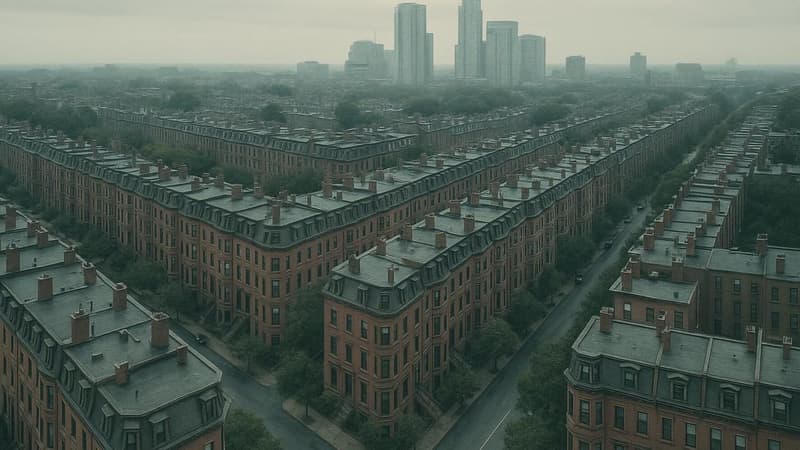
There is a form of zoning in America that operates with none of the transparency of conventional land-use law, resists revision more effectively than single-family codes, and concentrates its benefits almost entirely among those who already own property in the most coveted urban neighborhoods. It is called historic preservation. In New York City alone, the Landmarks Preservation Commission (LPC) oversees more than 38,000 landmark properties spread across 157 historic districts in all five boroughs — a designation regime that, as of 2025, subjects roughly 20 percent of Manhattan to the commission's strict scrutiny. That is not heritage stewardship. That is supply restriction at scale.
What Landmark Designation Actually Does
Historic preservation law is generally framed as a cultural good: protecting architectural heritage, stabilizing neighborhood character, honoring the past. Few reasonable people object to saving Grand Central Terminal or Independence Hall. The problem is that the mechanism created to protect those singular landmarks has been quietly weaponized into a generalized tool for preventing new housing in expensive, transit-rich neighborhoods.
When a building or district receives landmark designation, the owner's right to demolish, substantially alter, or redevelop the property is effectively terminated, not paused. The Manhattan Institute's analysis of Brooklyn's Victorian Flatbush put it plainly: while zoning can change in response to new data and democratic pressure, landmarking doesn't. An aesthetics commission votes, and land-use decisions are locked in for generations. The city's planning agency — which is supposed to balance housing, transit, climate, and economic goals — then reviews the designation almost entirely for procedural compliance, with no mandate to weigh the cost to future residents who will never be able to live there.
The scale of this in New York City is staggering. Per the LPC's own description, it is "the largest municipal preservation agency in the nation." The combined Park Slope Historic District encompasses more than 2,000 buildings. It has expanded twice as the neighborhood gentrified, each expansion adding more restrictions and fewer housing options. These are not isolated monuments. They are large swaths of the most transit-connected, highest-demand real estate in the country, permanently reserved for low-density use.
The Research: Preservation Inflates Prices, Suppresses Supply
The empirical record is clear. Edward Glaeser of Harvard and colleagues examined the timing of historic district designations in New York City in NBER Working Paper 20446, "Preserving History or Hindering Growth?" The paper's central finding is the one that preservation advocates rarely quote: designation reduces new construction within and near designated areas while raising property values for existing owners. In other words, landmark law functions as a textbook supply restriction — it benefits incumbent property owners by raising asset values while imposing the cost on everyone who wants to move into a neighborhood. Those costs are borne by renters who pay higher rents, by buyers who are priced out, and by workers who must commute from farther away because they cannot afford to live near the transit infrastructure they use.
This is not a side effect. This is the mechanism. Supply restriction raises prices. The existing owners of designated properties receive a windfall. Everyone else pays it.
A Commission Without a Balancing Mandate
The structural problem is institutional. The LPC is staffed with preservationists — people trained and incentivized to find historical significance in as many buildings as possible. The commission evaluates architectural and historic merit. It is not required to consider housing supply, rents, affordability, transit access, or climate goals. Those costs are externalized onto other parts of city government, and ultimately onto the housing market itself.
The Real Deal reported in November 2025 a telling example from developer Eli Lever: after waiting months for the LPC to approve a mortar color for a routine brick facade repair, Lever noted that the process made renovation two to three times more expensive and time-consuming. "The wait can be a killer," he said, but property owners have no alternative, since renovations requiring building permits cannot proceed without LPC approval. The result is that preservation, intended to protect buildings, often incentivizes neglect: owners defer maintenance rather than navigate a bureaucratic process that can take months to resolve a question that a competent architect should be able to answer in a meeting.
The Hayek Problem: Who Knows What's Worth Preserving?
Friedrich Hayek's most important contribution to economics was the observation that no central planning body can possess the distributed, context-specific knowledge that market prices aggregate automatically. Applied to housing and preservation, the question is: who decides which buildings are worth freezing in place, at what cost, and for whose benefit?
A commission of eleven mayoral appointees applying aesthetic criteria from the past cannot know what a neighborhood will need in 2050. It cannot weigh the welfare of the family that will not find an apartment against the aesthetic preferences of those who have already secured one. It cannot know whether the brownstones of Victorian Flatbush — which sit within a 45-minute commute of Times Square along the Q line — represent a more valuable use of that land than the mixed-income apartment buildings that the market would otherwise produce. The market cannot answer that question perfectly either, but it at least aggregates the preferences of millions of actual participants rather than eleven appointed commissioners applying standards from a century ago.
The Perverse Outcome: What Gets "Saved" Is Often Demolished Anyway
The most damning evidence against the current regime is what actually happens to the buildings that preservation battles are fought over. In Seattle, the Landmarks Preservation Board designated the Wayne Apartments to prevent a 124-unit apartment building from being built. The preserved building subsequently fell into disrepair, caught fire in 2022, and was then demolished. One hundred and twenty-four apartments that would have housed over 200 people were never built, and the "saved" structure no longer exists. In the same city, the 2016 landmarking of the Mama's Mexican Kitchen building blocked 63 apartments. The building grew derelict and was demolished in early 2025. Not a single unit of housing was gained. The only beneficiaries were the litigation strategy and the brief institutional victory of those who preferred an empty building to a full one.
In Denver, preservationists attempted to landmark a 1960s diner to block its redevelopment into an eight-story mixed-use apartment and retail building. Across American cities, the same pattern recurs: landmark designation is applied strategically to prevent development that the existing neighborhood dislikes, not because the structure in question has genuine architectural significance.
The Reform Path Forward
Milton Friedman's framework for evaluating any government intervention is simple and rigorous: identify who benefits and who pays, and ask whether the result could be achieved less coercively. Historic preservation, as currently structured, transfers wealth from future residents to current ones, from renters to owners, and from would-be builders to entrenched neighborhood interests, while often failing even to preserve the buildings it designates.
Market-compatible reforms exist. Oregon state law requires owner consent before a property can receive landmark designation — a straightforward check on coercive preservation. Washington state considered companion legislation in 2025 that would establish a statewide owner-consent standard. A minimum age requirement of 40 or 50 years for designation eligibility would filter out the strategic use of landmark law to block development of ordinary mid-century structures. Mandatory housing impact assessments — parallel to environmental impact review — would require preservation commissions to quantify the units lost before a designation could be finalized.
None of these reforms would eliminate historic preservation. They would simply impose a basic discipline that the current system lacks: a requirement to account for what is destroyed, not just what is saved. Every apartment that is never built because a preservation commission voted to freeze a block in amber is a cost as real as a demolished landmark — it is simply borne by people who have no standing before the commission and no seat at the table. A serious housing policy must account for them.
Part of the Zoning & Land Use research cluster.