The Airbnb Scapegoat: Why Short-Term Rental Bans Cannot Fix America's Housing Affordability Crisis
· 5 min read · By Affordable Housing Initiative
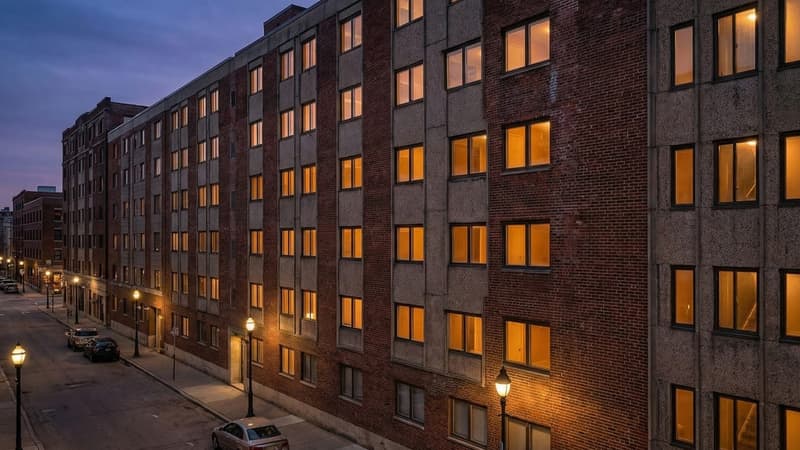
In September 2023, New York City implemented one of the most aggressive short-term rental restrictions in the world. Local Law 18 required STR hosts to register with the city, be physically present during any guest stay, and limited bookings to a maximum of two guests at a time — effectively banning whole-unit Airbnb rentals. The result was swift: short-term rental listings across the five boroughs fell by more than 90%. Policymakers declared victory. Then the rent bills arrived. From October 2023 to October 2024, median asking rent across New York City apartments increased 2.1%. The supply shortage that existed before LL18 existed after it, too, because short-term rentals were never the cause.
The Scale Problem: STRs Are a Rounding Error Against a 3.7-Million-Unit Deficit
To understand why STR bans fail, start with the arithmetic. The United States has approximately 148.3 million housing units, according to Federal Reserve Economic Data. As of mid-2025, there were roughly 1.77 million short-term rental listings in the U.S., of which approximately 89% were whole-home listings — approximately 1.57 million units. That is roughly 1.1% of the total housing stock.
Against that figure, set the supply shortfall. Freddie Mac's most recent estimate, based on data through the third quarter of 2024, puts the U.S. housing shortage at 3.7 million units — more than twice the entire short-term rental inventory in the country. Even in the mathematically impossible scenario where every single STR listing instantly converted to a long-term rental, the nation's housing deficit would still be roughly 2.1 million units. The STR "problem," numerically speaking, is dwarfed by the supply-restriction problem that preceded it by decades.
Academic research confirms the marginal impact. A 2021 study published in Marketing Science analyzing U.S. zip-code-level data found that a 1% increase in Airbnb listings was associated with only a 0.018% increase in rent prices and a 0.026% increase in home prices — effects so small they are effectively swamped by supply-side constraints. When a city's rents are rising 5, 10, or 15 percent annually, a mechanism explaining 0.018 percent deserves proportionately modest policy attention.
New York City: A Natural Experiment in Misdiagnosis
The NYC experience is invaluable precisely because the intervention was so aggressive. LL18 reduced Airbnb listings by over 90% between enforcement in September 2023 and early 2025. This is not a partial policy test. It is as close to a complete elimination of whole-unit short-term rentals as any major city has achieved. The result was not lower rents. It was not more available apartments. It was, predictably, higher hotel rates — up approximately 6% in 2024 — as visitors who previously booked Airbnbs shifted to the only remaining option.
This outcome is not surprising to anyone reasoning from economic first principles. Restricting one form of property use does not conjure new housing supply. The apartments that hosted Airbnb guests were not, in most cases, units that would have housed long-term tenants had the platform not existed. Many were owner-occupied primary residences rented occasionally; others were purpose-built investment units whose owners converted to longer-term leases only to find that rent stabilization laws and eviction restrictions made those arrangements unattractive — another regulatory layer compounding the first.
Hayek's Price Signal: What High STR Returns Are Actually Telling Us
Friedrich Hayek's insight about the price system as a decentralized information network has direct application here. When a property generates significantly higher returns as a short-term rental than as a long-term lease, that price signal communicates something specific: demand for accommodation in this location exceeds the supply of units available to meet it. Property owners are not villains for responding to this signal. They are acting as market participants should. The appropriate policy response to a persistent, city-wide signal of housing scarcity is to increase supply, not to penalize the behavior the signal induces.
Banning short-term rentals is the housing policy equivalent of smashing a thermometer to fix a fever. The thermometer (STR profitability) is measuring a real condition (severe housing shortage); destroying the measurement does not cure the underlying condition. It merely makes the signal invisible while the supply deficit persists.
Sowell's Stage One: The Visible Symptom vs. the Invisible Cause
Thomas Sowell identified what he called "Stage One" thinking — policy analysis that stops at the immediate, visible effect of an action without tracing its deeper causes or longer-term consequences. STR restrictions are a textbook case. The immediate, visible fact is that Airbnb listings exist and housing is expensive. The causal connection between the two — even where demonstrable — is quantitatively trivial compared to what zoning, permitting bottlenecks, environmental review requirements, impact fees, and parking minimums have done to housing supply over the past fifty years.
A 2002 National Bureau of Economic Research working paper by Edward Glaeser and Joseph Gyourko concluded plainly: "our evidence suggests that zoning and other land use controls play the dominant role in making housing expensive." That paper was published before Airbnb existed. The housing affordability crisis it documented had nothing to do with platforms that allow homeowners to rent spare bedrooms. It had everything to do with governments restricting the quantity of housing that can legally be built.
Property Rights and the Limits of Regulatory Reach
There is also a property-rights dimension that the STR restriction debate tends to elide. Milton Friedman argued consistently that economic freedom and individual liberty are not separable — that restrictions on what individuals can do with their own property are not costless administrative adjustments but genuine infringements on freedom with real economic consequences. When a city tells a property owner that she may not rent her apartment to a visiting family for three nights, it is exercising regulatory authority over a voluntary, consensual transaction that harms no one.
The argument for such restrictions rests on externality claims — that STR activity harms neighboring long-term residents through noise, disruption, and reduced housing availability. The first two are genuine neighbor complaints with targeted remedies that do not require broad market restrictions. The third — reduced housing availability — is, as the data shows, empirically negligible at the scale of total housing stock, while the supply restrictions that create the shortage in the first place are entirely the product of prior government action.
The Correct Diagnosis: Remove Supply Restrictions
The solution to housing unaffordability is more housing. That conclusion is banal only because it has been systematically avoided by policymakers who find it politically easier to restrict Airbnb than to overturn decades of exclusionary zoning, streamline permitting processes, eliminate parking minimums, and allow the market to respond to the price signals it has been sending for years. The Irvine, California STR ban produced a 3% decrease in rents — a minor, temporary market adjustment in a city that remains unaffordable by any objective measure because its underlying supply constraints are unchanged.
Cities that genuinely want to improve housing affordability have a clear and well-documented playbook: legalize more housing types across more of the city, reduce regulatory compliance costs that add tens of thousands of dollars to every new unit, and accelerate permitting timelines that currently stretch years in some jurisdictions. These interventions address the 3.7-million-unit deficit directly. STR bans address a rounding error while restricting property rights, eliminating income for homeowners, and driving up hotel costs for visitors — all without measurably improving housing affordability for the residents they claim to protect.
Part of the Zoning & Land Use research cluster.