The Conforming-Loan Ratchet: Why Higher Federal Loan Limits Cannot Fix Housing Affordability on Their Own
Washington can index mortgage credit ceilings to rising prices. It cannot index away housing scarcity.
· 5 min read · By Affordable Housing Initiative
The Federal Housing Finance Agency just raised the 2026 baseline conforming loan limit to $832,750, up $26,250 from 2025, with a high-cost ceiling of $1,249,125. The adjustment followed FHFA’s measured 3.26% national home-price increase in the statutory index window. That move keeps federally eligible mortgage credit aligned with today’s price map. But a higher debt ceiling is not the same thing as lower housing cost.
From a Chicago-school perspective, this is straightforward: a financing variable can ease access to bidding power, but it cannot create supply. Hayek would describe this as a coordination problem between credit transmission and physical production. Sowell would call it a trade-off hidden inside a subsidy narrative. If policy increases the maximum amount households can borrow faster than local systems allow builders to add homes, the likely near-term result is more purchasing power chasing the same stock.
What the 2026 Increase Actually Does
FHFA’s own methodology document explains that conforming limits are formula-based under HERA and tied to annual home-price movement, not to an affordability target in itself, as detailed in the 2026 conforming loan limit addendum. That matters, because it clarifies intent. The policy is designed to keep the Enterprises’ eligibility perimeter current with market prices, not to pull prices down.
At the local level, the change is not abstract. FHFA’s county table for 2026 shows exactly where higher ceilings now apply across the country in the official county-by-county limit file. In practice, that means more homes in expensive metros remain inside conforming credit channels. For buyers at the margin, this can preserve financing options. For market-wide affordability, it does not address the quantity bottleneck.
FHFA’s Evidence Is Nuanced, and Useful
A serious analysis should acknowledge FHFA’s own empirical work, not caricature it. In its Insights review, FHFA reports that near-limit Enterprise acquisitions have not clearly shifted toward relatively higher-end homes within local markets. That finding is important and often overlooked. It weakens simplistic claims that every limit increase automatically “luxury-ifies” conforming activity.
Still, that does not overturn the broader affordability mechanism. The key question is not only where near-limit loans sit within local percentiles. The key question is whether total housing supply adjusts fast enough when financing capacity expands. If supply remains constrained, preserving debt access can stabilize participation but still leave price pressure unresolved.
The Quantity Side Is Still Tight
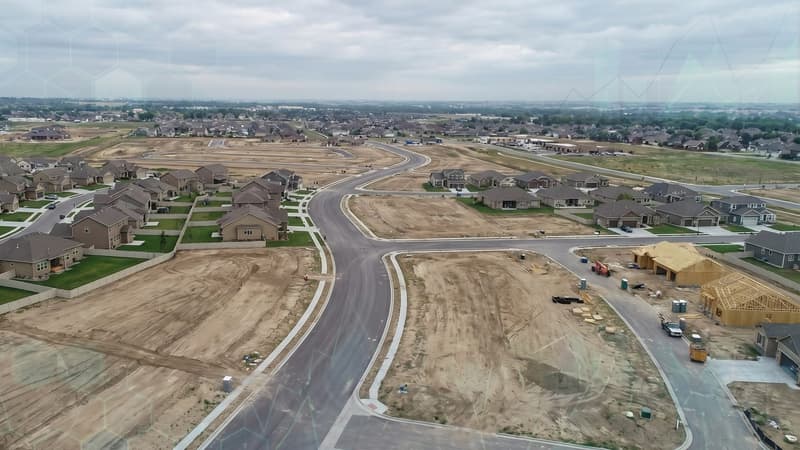
The latest national construction release underscores the pipeline problem. The Census Bureau reports single-family permits at an annual rate of 876,000 and single-family starts at 935,000 in the latest reported month. Those are large absolute numbers, but still modest relative to cumulative affordability pressure in high-demand metros.
Worse, policymakers have recently had to navigate delayed supply reporting. Census announced that the February and March new-residential-construction releases were rescheduled to a single April 29 publication, per the agency’s current New Residential Construction notice. When real-time supply visibility is thin, demand-side tools become politically easier to scale than supply-side reform, even if the latter is what affordability needs most.
Credit Conditions Remain Expensive
Mortgage-rate levels remain another constraint. Freddie Mac’s PMMS still places the 30-year fixed rate in the mid-6% range in recent weekly readings, according to its official mortgage-rate series. So while conforming-limit changes preserve eligibility for larger loan balances, households are still financing those balances at rates far above the ultra-low era.
That interaction matters. In a 3% mortgage world, a higher limit can feel like optional flexibility. In a 6% mortgage world, the same limit can translate into materially higher monthly payment risk for marginal buyers. Credit access is necessary for transactions, but payment burden is what determines durability.
The Free-Market Affordability Test
The deeper affordability question is whether policy improves the market’s capacity to produce more homes where people actually want to live. A recent NBER synthesis on affordability and production stresses that supply outcomes are central to long-run price behavior, especially where constraints are strongest, in Housing Supply and Housing Affordability. That aligns with Hayek’s information argument and Friedman’s skepticism of interventions that treat symptoms while leaving institutional barriers intact.
So what should follow from the 2026 conforming-limit increase? Not panic, and not complacency. The increase is a mechanical policy response and, on its own terms, internally coherent. But it should be paired with reforms that improve supply elasticity: faster approvals, fewer discretionary veto points, and lower compliance drag on entry-level and middle-market housing projects. Absent those changes, each annual limit increase risks becoming a ratchet that keeps financing in sync with scarcity, rather than reducing scarcity itself.
The bottom line is simple. Washington can adjust the amount of mortgage debt that qualifies for federal backing. It cannot legislate more homes into existence by adjusting that number alone. Affordability improves when supply can scale, not merely when debt ceilings do.
The $832,750 Ceiling: How Fannie and Freddie Keep Inflating the Market They Claim to Help
Folded in from a companion piece first published . Its figures and sources are preserved below.
On December 9, 2025, the Federal Housing Finance Agency issued a press release that received almost no mainstream coverage. The agency announced that it was raising the conforming loan limit — the maximum mortgage balance that Fannie Mae and Freddie Mac will purchase — to $832,750 for most of the United States, effective January 1, 2026. That number is up $26,250 from 2025. It is up more than $330,000 from 2014. And it means that the federal government now backstops mortgage debt up to nearly a million dollars in the majority of American counties. The announcement generated roughly as much public debate as a routine postal rate adjustment. The housing market, meanwhile, grew less affordable the next month.
This is the story of a policy engine that runs quietly in the background while everyone argues about mortgage rates, zoning variances, and housing starts. The conforming loan limit is, functionally, an annual government decision to expand the zone of subsidized credit available to home purchasers. It is presented as a technical adjustment to market realities. Viewed through the lens of basic price theory, it is something else entirely: a demand subsidy that chases the prices it partly creates.
What the Conforming Loan Limit Actually Does
Fannie Mae and Freddie Mac do not originate mortgages. They purchase them. A lender — a bank, a credit union, a mortgage company — makes a loan to a homebuyer and then sells that loan to one of the GSEs, which packages it into a mortgage-backed security and sells it to investors. The critical feature of this arrangement is the guarantee: the GSEs promise investors that they will receive principal and interest payments even if the borrower defaults. That guarantee carries an implicit federal backstop, which has been explicit since the government placed both entities into conservatorship in September 2008, where they remain today.
This guarantee is not free. But its cost is not borne by the homebuyer or the investor in any transparent way. Instead, it is socialized, dispersed across taxpayers who stand behind the guarantee and absorbed by buyers who pay higher prices in a market where government-backed credit competes with private savings. The FHFA's 2026 conforming loan limit announcement describes the mechanism in dry, bureaucratic language. The economic reality is more pointed: lenders offer better interest rates on conforming loans than on "jumbo" loans that exceed the limit, because the GSE guarantee reduces lender risk. The conforming limit is therefore a price floor below which government-subsidized credit is continuously available. Every time that limit rises, the zone of preferential, government-backed financing expands.
A History of Limit Creep
The trajectory of the conforming loan limit over the past twelve years illustrates the scope of the expansion. In 2014, the baseline limit was $417,000. By 2019 it had reached $484,350. It jumped to $548,250 in 2021, then $647,200 in 2022, $726,200 in 2023, $766,550 in 2024, $806,500 in 2025, and $832,750 in 2026. That is a 99.7% increase in twelve years — a near-doubling of the government's mortgage guarantee. Over the same period, median household income rose roughly 40%, and general consumer price inflation, as measured by CPI, rose approximately 35%.
The conforming limit has outpaced both wages and inflation. This is not a neutral technical adjustment tracking the economy. It is a systematic expansion of the government's role in the mortgage market, growing faster than the capacity of American households to earn their way into homeownership. The FHFA sets the limit using its own House Price Index, which measures home prices nationally. When prices rise, the formula produces a higher limit. The limit expansion enables more government-backed loans at higher values. Those loans support higher prices. Which the FHFA then measures. Which produces a yet-higher limit the following December.
The Self-Referential Ratchet (A Hayek Problem)
Friedrich Hayek's most enduring contribution to economics was not a policy prescription but an epistemological warning: centralized decision-makers lack the dispersed, local knowledge required to set prices correctly. The FHFA is not setting the conforming limit arbitrarily. It is following a formula. But the formula is self-referential in a way Hayek would have recognized immediately. The agency measures a price that its own prior decisions have helped inflate, then uses that measurement to justify further demand expansion.
Consider what the formula cannot see: it cannot distinguish between home price appreciation driven by genuine productivity growth, by supply constraints caused by zoning and regulation, or by demand inflation driven by prior conforming limit expansions and loose monetary policy. It measures a composite price signal that contains all of these effects and treats the number as an objective market reality requiring technical accommodation. The result is a policy ratchet that can only move in one direction. Even as the Federal Reserve raised the federal funds rate to 3.75% — the steepest tightening cycle in four decades — the FHFA continued raising the conforming limit. In 2023, when mortgage rates exceeded 7% and housing affordability reached its worst levels since the 1980s, the conforming limit still increased. In 2026, with the FOMC holding rates at 3.50%–3.75% and 30-year fixed mortgages at approximately 6.00%, the limit increased again. The mechanism has no reverse gear.
Who Benefits — and Who Actually Pays
Milton Friedman identified the core logic of demand subsidies with characteristic directness: when the government subsidizes the purchase of a good without expanding that good's supply, the subsidy is captured by sellers through higher prices. The conforming loan limit is a demand subsidy. It does not build a single home. It makes it easier for buyers to borrow more money to buy the homes that already exist. In a supply-constrained market — and the American housing market is severely supply-constrained — the primary beneficiaries of that additional purchasing power are sellers, not buyers.
The data bear this out. The NAR Housing Affordability Fixed Rate Index stood at 108.4 in November 2025 — technically above 100, meaning a median-income family can technically qualify for a median-priced home nationally. But the national number obscures regional devastation. The West region's affordability index is 75.2, meaning a median-income family in the western United States earns only 75% of the income needed to qualify for a median-priced home. These are the markets where conforming limits are highest — in high-cost areas like San Jose and San Francisco, the 2026 limit reaches $1,248,150 — and where they do the least good for buyers and the most good for sellers.
Thomas Sowell captured the underlying political economy precisely: there are no solutions, only tradeoffs. The conforming loan limit solves a political problem for Washington — it allows policymakers to appear to be helping homebuyers — while the actual tradeoff is borne by the next generation of buyers, who inherit a market with higher baseline prices and a government guarantee that has expanded to match them. The current buyer gets a slightly cheaper mortgage rate. Future buyers get a higher purchase price. The subsidy is real; its direction is backwards.
The Scale of the GSE Footprint
To appreciate the demand-side pressure this system generates, consider the scale. The FHFA set 2026 multifamily purchase caps at $176 billion combined — $88 billion each for Fannie Mae and Freddie Mac — for apartment loans alone. On the single-family side, Fannie Mae and Freddie Mac together back approximately 60–65% of all new mortgage originations in the United States. This market share has not recovered to pre-2008 levels; it has expanded beyond them. After the financial crisis, private-label mortgage securitization — the packaging of mortgages without a government guarantee — essentially collapsed and never recovered. The GSEs filled the void, and then some.
The practical effect is a market in which private capital cannot compete on equal terms with government-guaranteed debt. A private lender who packages and sells mortgages without a GSE guarantee must hold more capital, price in default risk explicitly, and offer less attractive terms to investors. This structural disadvantage means that for any home purchase within the conforming limit, a government-backed loan will almost always be available at a better rate than a fully private one. The conforming limit is not just a ceiling. It is a subsidy boundary. Below it, government credit dominates. Above it, the market is forced to actually price risk.
Supply Is the Missing Variable
The most revealing data point in the housing affordability picture is not the conforming limit itself. It is the supply response, or rather, the absence of one. January 2026 single-family housing starts came in at 935,000 seasonally adjusted annualized units — down 2.8% from December and well below the pace needed to close America's housing deficit. The National Association of Home Builders characterized single-family production as "soft" and cited affordability constraints — by which they mean that builders cannot profitably construct homes at prices buyers can afford, even with government-backed financing available up to $832,750 and mortgage rates at 6%.
This is the central contradiction. The conforming loan limit helps buyers borrow more; it does not help builders build more. Regulatory costs alone — permits, impact fees, environmental reviews, compliance requirements — account for an estimated $93,870 per new single-family home, according to NAHB's 2021 regulatory cost study. When the government responds to this supply crisis by raising the ceiling on subsidized demand rather than lowering the cost of construction, it is making a policy choice: it is choosing to inflate the price of existing homes rather than expand their supply. Every dollar of additional conforming limit capacity absorbed by the market in the form of higher prices is a dollar that could have been spent reducing regulatory barriers to new construction.
The Conservatorship Question
Fannie Mae and Freddie Mac have been in federal conservatorship since September 2008, eighteen years. There has been periodic discussion in Washington of releasing them, returning them to fully private status, or reforming the system entirely. Whatever the governance structure, the structural problem does not change: any entity whose obligations carry an implicit or explicit federal guarantee can borrow more cheaply than private competitors, and that advantage will be reflected in the prices of the assets it finances.
The question is not whether the GSEs should exist in their current form. That is a legitimate policy debate. The question is what the conforming loan limit, as an annual policy decision, is actually accomplishing. The FOMC's March 2026 projections show PCE inflation at 2.7% for the year, still above target. The Fed is holding rates. Mortgage rates are at 6%. Single-family starts are soft. And the conforming limit just increased by $26,250. The engine keeps running.
What a Market-Oriented Alternative Looks Like
A free-market housing finance system would price mortgage risk through private capital markets, with default risk borne by investors and priced into interest rates transparently. Government assistance, where it exists, would be targeted — means-tested support for low-income buyers, not a blanket guarantee available up to $832,750 to any qualified borrower purchasing any home in any market. The current system inverts this logic: it provides the largest subsidy to the largest loans, in the most expensive markets, where buyers need the least help and sellers need it the least.
More fundamentally, any serious housing affordability policy must address supply. The cities and regions that have seen genuine rent and price moderation — Houston's absence of traditional zoning, Tokyo's permissive national building code, Minneapolis's elimination of single-family-only zoning — share one feature: they allowed more housing to be built. The conforming loan limit cannot build a home. It can only make it easier to bid against the next buyer for the ones that already exist. Until the supply side of the housing equation is addressed, every expansion of the conforming loan limit is fiscal kindling thrown on a fire that Washington claims to be fighting.
The $832,750 ceiling is not a market outcome. It is a policy decision, made annually, with almost no public deliberation, that expands the government's role in determining who can buy a home and at what price. The mechanism is self-referential, the ratchet moves only upward, and the beneficiaries are sellers, not buyers. December will come again. The formula will produce a new number. And the housing market will absorb it — at a higher price.
The Mortgage Ladder Keeps Rising: How FHA and Conforming-Loan Expansion Inflate Demand Faster Than Supply
Folded in from a companion piece first published . Its figures and sources are preserved below.
Federal housing policy continues to treat affordability as a credit problem, even while supply remains constrained. In fiscal year 2024, FHA insured 766,942 forward mortgages, and HUD reports that more than 82% of FHA purchase endorsements went to first-time buyers. At the same time, FHFA raised the baseline conforming loan limit to $832,750 for 2026. In plain terms, Washington has kept widening the financing channel into the same structurally tight housing market.
From a Friedman-Sowell perspective, the mechanism is not mysterious. Demand subsidies increase effective purchasing power. If supply is inelastic in the short run, those subsidies capitalize into prices. You can call this support, inclusion, or market stabilization, but the math does not care about the label.
Credit Expansion Meets Inelastic Supply
The price response has been large. The S&P CoreLogic Case-Shiller U.S. National Home Price Index rose from 212.361 in January 2020 to 326.612 in January 2026 — a gain of roughly 53.8% over six years. That increase occurred while policymakers repeatedly expanded credit channels rather than removing local and state supply barriers.
The financing side has expanded as well. Household mortgage debt outstanding, as tracked in Federal Reserve flow-of-funds data, rose from $10.46 trillion in Q1 2020 to $13.77 trillion in Q4 2025. That is a debt increase of about 31.6% in five years. More leverage in a constrained market is not a path to lower real housing costs; it is mostly a path to higher bid prices and greater balance-sheet fragility.
The “Access” Story Is Real — and Incomplete
None of this means FHA has no social function. HUD’s own release shows FHA continues to serve borrowers who are less likely to be reached by purely private underwriting channels, including first-time and minority households, at meaningful scale in FY2024. That is a real policy objective, and it should be acknowledged honestly.
But the second-round effect is equally real: when government-backed credit reaches broad markets where new supply is administratively throttled, marginal buyers are forced to compete for a limited stock of homes. The immediate winner is not “affordability”; it is the incumbent seller who can command a higher clearing price. Hayek would call this a coordination failure imposed by policy architecture, not corrected by it.
Conforming-Loan Limits as an Automatic Demand Ratchet
The conforming-loan framework is often presented as a neutral technical tool. In practice, it behaves like an automatic ratchet. The 2026 FHFA announcement lifted the one-unit baseline by $26,250 year over year. The institutional signal is straightforward: as prices rise, policy raises the ceiling that federally backed channels can fund.
That is not merely accommodation; it is reinforcement. In high-cost and near-threshold markets, each limit increase broadens the quantity of housing that qualifies for subsidized secondary-market execution. Sellers, lenders, and buyers adapt quickly. The political optics are expansionary; the economic incidence tends to run through price.
Rate Volatility Magnifies the Distortion
When rates were abnormally low, this credit architecture amplified price acceleration. Freddie Mac’s 30-year average, captured in FRED, touched 2.65% in January 2021. By April 9, 2026, it stood at 6.37%. That swing did not unwind prices to pre-2020 levels; it mainly converted affordability stress from “price shock” into “payment shock.”
The result is a market where households face both high principal and high financing cost. This is why headline affordability remains strained even as nominal rate paths fluctuate. The Housing Affordability Index has improved from its recent trough, but at 117.6 in February 2026, it still reflects a market where median-income households do not have substantial error margin when rates, taxes, or insurance costs move against them.
What a Free-Market Correction Would Actually Prioritize
Chicago-school analysis does not require abolishing every federal program overnight. It does require policy sequencing that stops subsidizing bids before freeing supply. A coherent affordability agenda would:
1) Freeze further expansion of federally backed demand channels (including automatic upward drift in effective conforming coverage) until local supply constraints are demonstrably loosened.
2) Shift federal leverage toward removing barriers to construction throughput — permitting delay, exclusionary zoning, and code/fee accumulation that suppresses elasticity.
3) Evaluate housing “access” programs on incidence, not intent: who captures the subsidy in equilibrium, and how much of the transfer capitalizes into land and structure prices.
Affordability is fundamentally a supply-and-price problem, not a mortgage-product design problem. As long as Washington continues to widen purchasing power faster than cities and states allow housing output to respond, the cycle will repeat: larger loans, higher prices, heavier debt, and another policy round promising relief.
The uncomfortable conclusion is also the most empirically consistent one: credit can help households enter markets, but it cannot make structurally scarce housing cheap. Only abundant supply can do that.
Part of the Subsidies & Tax Policy research cluster.